4th of July Ads: Angles and Offers Brands Run, and How to Test Yours
4th of July ads can use a patriotic theme, long-weekend sale, cookout, gifting or last-day deadline. Treat each as a hypothesis: log it, check margin and ship-by dates, test one variable.

By Sachit Sharma, CEO & Founder · Updated 9 Nov 2026

Key takeaways
Treat every rival’s 4th of July ad as a hypothesis. Capture it while it runs, drop anything that fails your margin or ship-by dates, and test what survives one variable at a time.
Start the log on Sunday, May 23, 2027. Meta’s Ad Library searches only running US commercial ads, so six weeks out is the earliest you can begin building evidence.
Count back from the calendar, not the date alone. July 4, 2027 is a Sunday and the federal holiday is observed Monday, July 5, so set your ship-by dates and your hard stop from those two days.
Wind down on Tuesday, July 6. Turn off last-day and delivery-promise ads, record what won, and keep the back-to-school log you started on June 28.
In this article
- 1What do 4th of July ads on Meta look like?
- 24th of July sale ideas: what each offer costs
- 3What creative treatments do 4th of July ads use?
- 4Why test more than one 4th of July creative?
- 5How do you study competitor 4th of July ads while they are live?
- 6What does a long run or a high ad count prove?
- 7How do you turn the log into a ranked test queue for 4th of July ads?
- 8When should you start 4th of July ads? A 6-week ad campaign calendar for 2027
- 9How do you set up a clean 4th of July test?
- 10What audience, budget and attribution window should a July 4 test use?
- 11What stop rule fits a holiday test?
- 12What do you do after July 4?
- 13What should you do first for 4th of July ads in 2027?
- 14Frequently asked questions
Last year’s 4th of July ads from your rivals are gone. Meta’s Ad Library searches only ads that are running now, and a US commercial ad that has stopped is not kept, so a 2026 campaign cannot be reviewed after the fact. The only competitor evidence you can use for 4th of July ads is evidence you capture while it runs.
Copying an angle is cheap. Checking it is not. A patriotic theme with 20% off may need a margin you do not have, and an “order by” deadline may promise a delivery date you cannot hit. 4th of July Facebook ads only help once they pass your own numbers.
This guide is written for the July 2027 season, when July 4 falls on a Sunday and the federal holiday is observed on Monday, July 5. It gives you an angle and offer table, a capture log, a two-gate ranking sheet and a calendar counted back from those dates, so you can start logging rivals on Sunday, May 23.
What do 4th of July ads on Meta look like?
This page sorts 4th of July ads into five angles (our grouping, not a count of ads): a patriotic theme, a long-weekend sale, cookout and summer, gifting and hosting, and a last-day deadline. Each pairs with an offer, and each offer asks something different of your margin. Treat them as ad ideas to test, not a template. An angle is the reason to buy now.
| Angle | Offer to test with it | What it asks of margin |
|---|---|---|
| Patriotic theme (flag colors, fireworks) | Percent off, sometimes a themed collection | Nothing by itself. The cost sits in the discount attached to it. |
| Long-weekend sale | Percent off, tiered discount or flash window | The discount on every unit sold in the window. A flash window shortens the days, not the depth. |
| Cookout and summer | Bundle, BOGO or free shipping | BOGO cuts the price of the pair. Free shipping is a flat cost per order. |
| Gifting and hosting | Free shipping or a tiered discount | A flat cost per order, plus the product cost of any gift. |
| Last-day deadline | The same offer plus an order-by date | No extra discount, but a delivery promise you must be able to keep. |
The National Retail Federation (NRF) and Prosper Insights & Analytics fielded their 2026 Independence Day survey from June 1 to 8, 2026 with 7,675 consumers and found 87% planned to celebrate and a record $94.41 average food spend, which measures food spending and says nothing about which ad offers perform. A gallery of 4th of July ad examples has the same limit: it shows what ran, not what worked, which is why Facebook ad examples and what each one proves treats them as tests.
4th of July sale ideas: what each offer costs
- Percent off gives away the discount on every unit. Break-even unit lift (the extra units you must sell to earn the same total gross profit as before the discount) = d ÷ (m − d), where d is the discount and m is gross margin (the share of the price left after product cost), both as a share of price. At 30% margin, 20% off needs 0.20 ÷ 0.10 = 2.0, so 200% more units. Our model, assuming the discount applies to every unit and ad spend is unchanged. Set your own line from margin with Good ROAS for Facebook Ads.
- BOGO means buy one, get one. With two same-price items, buy one get one free is 50% off the pair. Buy one get one 50% off is 25% off the pair: you pay 1.5 prices for 2 items.
- Tiered discounts (for example, save more as the basket grows) cost margin only on baskets that cross a threshold. Set thresholds above your current average order value, or the tier works as a sitewide discount.
- Free shipping is a flat cost per order, so it weighs most on small baskets.
- Flash windows use the same arithmetic as percent off, applied for fewer days.
What creative treatments do 4th of July ads use?
Log the treatment next to each angle, because two ads with the same offer can look very different. These are things to look for, not a ranking of what works:
- Patriotic theme: a flag-color palette, fireworks footage or a themed collection tile.
- Cookout and summer: video of the product in use outdoors, or a creator-style clip.
- Long-weekend sale: a static image or carousel with the date range and the discount as the headline.
- Gifting and hosting: the product shown as a set, a bundle or a table setting.
- Last-day deadline: a countdown or date text laid over the same creative as the main offer.
Record the format too (vertical video, static image or carousel). An angle test only works if the format stays constant, so the format is a variable for a later test, not something to change at the same time.
Why test more than one 4th of July creative?
One ad is one guess, and ads that differ by angle give you something to compare. Meta for Business describes creative diversification as building distinct assets for different people or use cases, not small edits to one idea, and Meta Engineering describes Andromeda as its ads retrieval system. What that means for your account is covered in the Meta Andromeda update guide.
A July 4 season makes the case sharper. The window is about six weeks, every offer costs margin, and a deadline can promise a delivery date you cannot keep. A cookout angle and a patriotic angle at the same offer is a cheap, fast comparison; choosing between them by instinct is not.
Data-backed decisions here mean three habits: log rivals while their ads run, pass each idea through your own margin and ship-by numbers, and change one variable at a time. That is what leaves you with a result you can reuse next season.
How do you study competitor 4th of July ads while they are live?
Capture each competitor ad while it is live and record your own dates. In Meta's Ad Library, every ad can be searched while it is active, but inactive ads can be searched only if they are about social issues, elections or politics. A log started on Sunday, May 23, 2027 is the only record of what rivals ran. Search steps and the weekly routine are in our Facebook Ad Library guide; these are the July 4 fields to add.

| Advertiser | Angle | Offer | Format | Hook | Start date shown | First seen | Last seen | Variants |
|---|---|---|---|---|---|---|---|---|
| Example Grill Co. (fictional) | Cookout | 15% off orders over $75 | 15-second video | "Your cookout starts Friday" | Jun 4, 2027 | Jun 7, 2027 | Jun 21, 2027 | 4 |
The hook is the first line or first seconds of the ad, and variants are the different versions running at once. Start date shown is the date the Ad Library displays for an active ad. First seen is the day you captured the ad. Last seen is your final capture where it was still running.
What does a long run or a high ad count prove?
A long run or a high count shows that an advertiser kept paying, not that the ads were profitable, and neither shows their margin or delivery promise. Read counts as a hint about where rivals are testing, not as a verdict. How to read them is in what competitor ad volume actually tells you.
How do you turn the log into a ranked test queue for 4th of July ads?
Put every logged ad through two gates in order: does the offer clear your margin, then can you ship by the date the ad implies. Rewrite or drop what fails, and test the survivors one variable at a time with one written hypothesis each.
| Logged ad | Variable you would test | Gate 1: margin | Gate 2: ship-by | Decision |
|---|---|---|---|---|
| Example Grill Co. cookout ad, "arrives by Fri Jul 2" (fictional) | Angle: cookout vs patriotic, offer held | Pass: break-even lift is below the median lift of your last three comparable promotions | Fail: far zones cannot receive it by Jul 2 on your carrier's service level | Remove the date, re-run the gate, then queue |
Gate 1 passes when the offer's break-even lift is below the median lift of your last three comparable promotions (our recommendation), and fails otherwise. Gate 2 passes when every order placed up to the ad's deadline can ship in time using your carrier's published cutoffs and stock on hand, and fails otherwise.
Three holiday hypotheses cover most queues:
| Hypothesis | Change | Hold constant |
|---|---|---|
| A cookout framing beats a patriotic framing at the same offer | Angle | Offer, format, hook style, audience, window |
| Free shipping over a set order value beats a percent off with a similar cost per order | Offer | Angle, creative, audience, window |
| An order-by date raises purchases among people who visited in the last 7 days | Deadline line | Everything else (use only when the date is true) |
If your own 2026 patriotic ads did well, remember that 2026 was the 250th anniversary of the Declaration of Independence (1776 to 2026). Reusing that creative in 2027 needs a fresh hypothesis. That is a reason to test, not evidence that patriotic ads underperform.
Writing each hypothesis is covered in A/B Test Hypothesis for Meta Ads. General concept scoring lives in Meta ad concept prioritization.
When should you start 4th of July ads? A 6-week ad campaign calendar for 2027
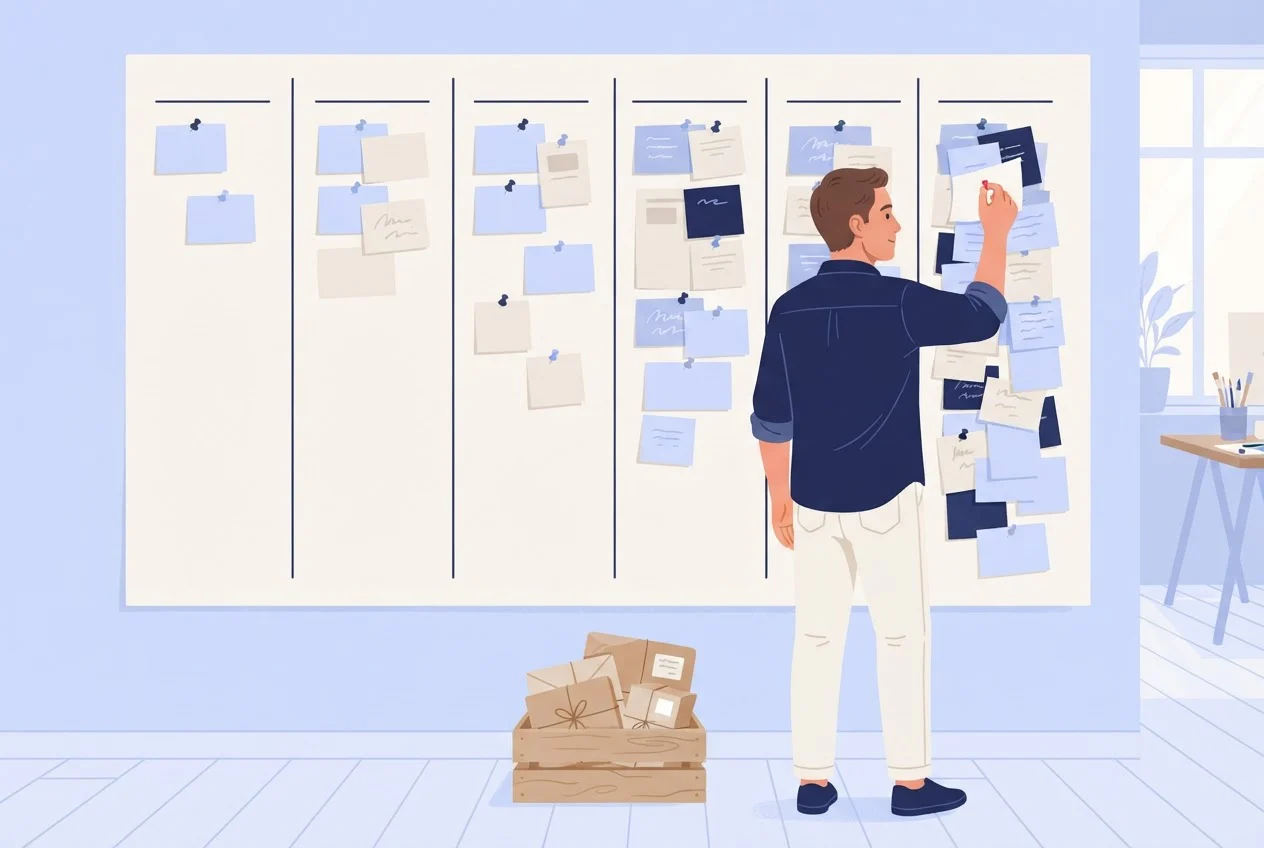
Start the capture log six weeks out, on Sunday, May 23, 2027, launch paid tests around Monday, June 7, lock creative Monday, June 21, and push from Monday, June 28. These are our recommended dates for a Sunday July 4. Creative lock means no new ads enter the push after that date. Six weeks is our recommendation because it leaves two test weeks before the June 21 lock plus a capture lead-in.
Counting six weeks back from Sunday, July 4, 2027 starts inside three other windows. The U.S. Office of Personnel Management (OPM) 2027 federal holiday table lists Memorial Day on Monday, May 31, Juneteenth observed on Friday, June 18, and Independence Day observed on Monday, July 5. Father's Day is Sunday, June 20. Those holidays have their own sales and creative, so the first weeks are for capture, not launches.
| When (2027) | What happens |
|---|---|
| Sun May 23 to Sun May 30 | Start the weekly capture-while-live log |
| Mon May 31 | Memorial Day: log, do not launch July 4 tests |
| Tue Jun 1 to Fri Jun 4 | Run both gates, write hypotheses, set your ship-by line from your carrier's published cutoffs |
| Mon Jun 7 to Sun Jun 13 | Test 1: angle only |
| Mon Jun 14 to Fri Jun 18 | Test 2: offer only, on the winning angle (Jun 18 is Juneteenth observed) |
| Sun Jun 20 | Father's Day: retire Father's Day creative |
| Mon Jun 21 | Read Test 2 and lock creative |
| Mon Jun 28 to Sun Jul 4 | Main push; retarget (show ads to people who already visited) in the final stretch; use "order by" copy only on dates your carrier cutoffs support |
| Mon Jun 28 | Start a separate back-to-school capture log next to the July 4 log |
| Sun Jul 4 | Holiday |
| Mon Jul 5 | Federal observance and hard stop for tests |
| Tue Jul 6 | Turn off last-day and delivery-promise ads |
| Jul 6 to your end date | Offer window continues without deadline claims |
| Mon Jul 12 onward | Record July 4 results and review your first back-to-school captures |
One week per test is a placeholder; the purchases your budget buys set the real length. OPM lists Monday, July 5, 2027 as the observed federal holiday, so check USPS, UPS, FedEx and any regional carrier's 2027 schedule for July 3 to 5 before you set an order-by date.
For the neighboring holidays, see our Memorial Day ad test plan and Father's Day Facebook ads. The offer window should end on a date you can defend: Sunday, July 11, Sunday, July 18, or the day stock for the featured items hits your reorder point. NRF's 2026 back-to-school survey asked shoppers about June sales events such as Prime Day, Walmart Deals and Target Circle Deal Days, so retailer events can land before July 4. Look up the 2027 dates as soon as they are announced and mark them on this calendar.
How do you set up a clean 4th of July test?
Use one audience, equal budgets, one attribution window and a hard stop. A clean test changes one variable and nothing else.
What audience, budget and attribution window should a July 4 test use?
Use one audience for every arm. Keep retargeting in a separate test from prospecting (ads to people who have not visited), and give each arm the same daily budget. Choose the attribution window, the days after a click or view in which Meta credits a purchase to an ad, before launch and keep it for the whole test, as in Meta Ads Attribution Window. Size the budget by purchases, not dollars: an arm that cannot buy enough purchases in the window cannot name a winner.
What stop rule fits a holiday test?
Every test ends by Monday, July 5, 2027, the observed holiday, and no new variable starts after creative lock on Monday, June 21. A test still undecided on July 5 is logged as undecided, not extended into the offer window. General stop rules are in Meta ad testing framework stop rules.
What do you do after July 4?
Record what won before the details fade. For each test, log the hypothesis, the one variable changed, the attribution window, the result and the decision. Fill in the last-seen dates on your competitor rows; last-seen dates show the earliest an ad could have stopped, not its exact end.
Keep the offer window running only with creative that makes no deadline claim, and end it on the date you chose. A July 4 winner is a result for one season, so note what depended on the Sunday and Monday calendar.
According to the NRF and Prosper Insights & Analytics 2026 back-to-school survey (fielded July 1 to 8, 2026 with 7,677 consumers), 62% of shoppers had already started shopping for the school year by early July, and 54% had shopped major June sales events such as Prime Day, Walmart Deals and Target Circle Deal Days for school-related purchases. Waiting until Monday, July 12 to start watching rivals puts your log behind the shopper, so run a separate log from June 28 and follow the same routine for back-to-school Facebook ads.
What should you do first for 4th of July ads in 2027?
No angle or offer earns a test until it clears your margin and your ship-by date. If an ad fails the margin gate, change the offer. If it fails the ship-by gate, remove the deadline and run the gate again. If it passes both, write one hypothesis, change one variable, and let the test finish before Monday, July 5, 2027.
In the next 48 hours, make a short list of the rivals you will check and put Sunday, May 23 in your calendar. The log is the only record you can build, because Meta does not keep ended commercial ads. On the day after the holiday, write down what won so next season starts from your own result, not a rival's. See how Deepsolv helps you understand what's working, why it's working, and what to test next.
See what to test next for your 4th of July ads
Frequently asked questions
Sources
- 1.Federal Holidays
- 2.Independence Day survey, 2026
- 3.What is the Meta Ad Library and how do I search it?
- 4.Meta Andromeda: Supercharging Advantage+ automation with the next-gen personalized ads retrieval engine
- 5.Demystifying Creative Diversification
- 6.Majority of Back-to-School Shoppers Get a Head Start on the Season, National Retail Federation with Prosper Insights & Analytics, July 14, 2026