
Ad Creative Brief Template for Meta Ads, Built Around One Test
An ad creative brief tells the creative team what to make, for whom, and why. For Meta ads it should also state one test hypothesis, a control ad, and a decision rule.

By Sachit Sharma, CEO & Founder · Updated 4 Oct 2026
Key takeaways
- 01An ad creative brief for Meta ads is a one-page test plan: one hypothesis, one changed variable, a control ad and a decision rule written before launch, plus the usual audience, message and specs.
- 02None of the nine templates we checked had a field for a test hypothesis, and none asked for results from the team's own earlier ads.
- 03At most about 45% of a Reels canvas is safe for text, logos and the offer (our calculation from Meta's minimum margins).
- 04The decision-rule field and a budget check together tell you whether a test can finish fairly: each ad set needs about 50 optimization events per week.
In this article
- 1What does an ad creative brief for Meta ads need to contain?
- 2What does a filled-in ad creative brief look like?
- 3Why do common creative brief templates leave out the test?
- 4How much of a Reels ad is safe for text and the offer?
- 5How much budget does each ad set need for a creative test?
- 6How do you check a creative brief before it goes to the editor?
- 7How does Deepsolv produce creative briefs?
- 8Frequently asked questions
A 2025 report from the ANA (Association of National Advertisers) found that more than three in four of the marketing and agency executives it surveyed ranked a tight brief with clearly defined objectives as the most important factor in great creative work, and poor briefs were the top roadblock to it (ANA, Better Creative Briefs for Better Brand Building).
That finding holds for a television spot and for a Meta ad. What changes on Meta is what happens after the brief. The ads go into live auctions, and each batch either teaches the team something or does not. A brief written only to get work approved cannot tell you which.
This page gives you a one-page brief built for that second job: eleven fields you can copy, a filled-in example, the arithmetic for placement and budget, and pass-or-fail checks to run before the brief goes to an editor.
What does an ad creative brief for Meta ads need to contain?
An ad creative brief for Meta ads needs eleven fields: last-test readout, hypothesis, one variable, control ad, evidence, hook directions, message and proof, placement specs, deliverables, mandatories, and a decision rule. Copy the list below and fill every field. An empty field means the ad is not ready to brief.
Four terms first. A hook is the opening seconds of a video ad, or the first line and image of a static one. A control ad is the existing ad a new one is measured against. Reels is Instagram's and Facebook's short vertical video placement. An ad set is the level in Meta Ads Manager that holds the budget, audience and placements for one or more ads.
Last-test readout
What you tested most recently, the result (win, loss, inconclusive, or "no test yet"), and one sentence on why you think it happened.Hypothesis
"We believe [angle] will beat [control ad] for [audience] because [evidence]."
One variable
The single element that changes: hook, offer framing, proof type or format. Everything else matches the control.Control ad
The ad the new one is measured against, and why that comparison is fair. Choose a Creative Test Control Ad That Sets a Fair Benchmark covers how to pick it.
Evidence and confidence
Where the idea came from and how strong that source is. Our recommendation is to rank sources in this order: a controlled conversion test in your own account, repeated results in your account, customer language from reviews and comments, repeated competitor activity. A single competitor ad should never justify a test on its own.Hook directions
Three options for the opening seconds, written as intent ("open on the frustration with leaking lids"), not as scripts.Message and proof
The one thing a viewer should remember, and the reason to believe it.Placement specs
Aspect ratio, safe zone, captions and sound (see the Reels section below).Deliverables and due date
Number of versions, formats, who approves, and when.Mandatories and don'ts
Required claims or disclaimers, usage rights if creators are making user-generated content (UGC), and anything to avoid.Decision rule
The metric, the minimum number of results before you read it, and explicit thresholds for a win, a loss and an inconclusive result.
What does a filled-in ad creative brief look like?
A filled-in brief fits on one page, and every line is specific enough to disagree with. The example below uses an invented brand and invented numbers. They illustrate the format and are not benchmarks.
Brand: Example Bottle Co., insulated steel bottles, sold online.
- Last-test readout: A price-led video beat a testimonial video on cost per purchase. Inconclusive on audience, because both ran to one broad audience.
- Hypothesis: We believe a hook about leak-proof lids will beat the price-opener control for commuters, because review comments mention leaks more often than price.
- One variable: The hook (the first three seconds) only. Same offer, same message, same proof, same 20-second length.
- Control ad: The current top-spend video, which opens on the price. It is the top spender and its landing page is unchanged.
- Evidence: Customer reviews (medium confidence). One competitor runs a similar angle (low confidence, so it creates a challenger, not a verdict).
- Hook directions (one challenger each): (a) a bag opened to a dry laptop; (b) a lid dropped upside down on camera; (c) a first-person complaint about a previous bottle, in the creator's own words.
- Message and proof: "Keeps drinks cold all day," shown with ice-test footage. Identical in the control and all three challengers.
- Placement: 9:16 for Reels, text inside the safe frame, captions on, sound on.
- Deliverables: Three hook versions (a, b, c) of the same video, due Friday, approved by the brand lead.
- Mandatories: No medical or "unbreakable" claims; show the logo in the last second.
- Decision rule: Read each ad set at about 50 purchases. Win: cost per purchase at least 15% below the control, so scale. Loss: 15% or more above the control, so retire the angle. Inconclusive: within 15% either way, so rerun once with a new hook.
Early attention numbers such as hook rate are signals, and the conversion result is the verdict. Meta Hook Testing: Hook Signals vs. Conversion Data explains the difference.
Why do common creative brief templates leave out the test?
Most creative brief templates are written for any medium, and a test needs fields that a generic template does not carry. We checked the sections and fields of nine templates that ranked, or were cited in AI answers, for "ad creative brief" and "creative brief template" in October 2026 (US): AMA, HubSpot, Smartsheet, Zapier, AdStops, Aha!, LegalClarity, Simple.io and Brainstormer. Deepsolv publishes this page and is not among the nine; some of the nine come from marketing-software vendors.
- 0 of 9 had a field for a test hypothesis.
- 0 of 9 asked for the results of the team's own earlier ads. The nearest was a competitor analysis section.
- 0 of 9 had a dedicated section for hook direction. Hooks were at most a passing mention.
- 0 of 9 gave Meta placement guidance such as safe zones. At most they named a channel or showed an example image size.
Briefs tend to fail in one of two ways: too vague ("make it engaging, women 25 to 45") or too rigid (a shot-by-shot script). Vague briefs leave editors guessing which variable matters. Scripts leave creators no room to make the ad feel natural. Our recommendation is to fix the variable and the constraints and leave the execution open: three hook directions as intent, one message, one proof.
Competitor ads belong in the evidence field as a lead, not a verdict. A visible ad shows what a rival is running, not what is working for them. Meta Competitor Research Into Testable Briefs covers how to turn them into testable challengers.
How much of a Reels ad is safe for text and the offer?
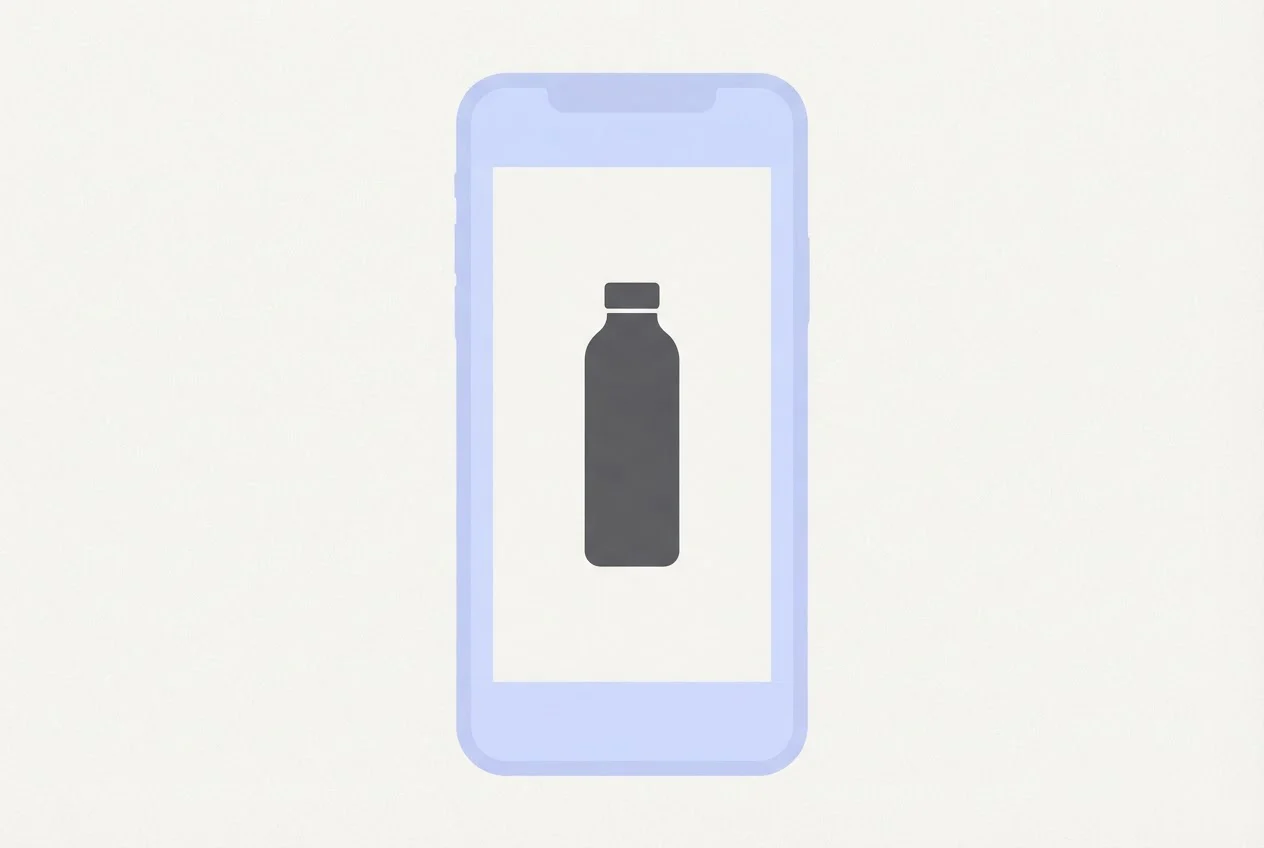
At most about 45% of a Reels canvas is safe for text, logos and the offer. That figure is our calculation from Meta's minimum margins: Meta lists Reels video at 1440 by 2560 pixels in 9:16 and advises leaving at least 14% of the top, 35% of the bottom and 6% of each side free of key elements (Meta Ads Guide, Instagram Reels video specs, as of October 2026).
Our working:
- Top margin: 0.14 × 2560 = about 358 pixels.
- Bottom margin: 0.35 × 2560 = 896 pixels.
- Safe height: 2560 − 358 − 896 = about 1,306 pixels, or 51% of the height.
- Side margins: 0.06 × 1440 = about 86 pixels each, leaving about 1,267 pixels, or 88% of the width.
- Safe area: 0.51 × 0.88 = about 45% of the canvas, at most, because Meta's figures are minimums.
For the placement field, that means every word, logo and price sits between roughly 358 and 1,664 pixels from the top (2560 − 896) and at least 86 pixels from either edge. Meta also recommends captions and strongly recommends sound on Reels, so say in the brief whether both are required.
How much budget does each ad set need for a creative test?
Budget per ad set per week equals 50 optimization events times your cost per event. At an assumed $40 per purchase, that is 50 × $40 = $2,000 per ad set per week. An optimization event is the result an ad set is trying to get, such as a purchase.
The 50 comes from Meta's guidance on ad sets marked learning limited, the status Meta shows when an ad set is unlikely to reach about 50 optimization events in the 7 days after a significant edit. Below that, results tend to be unstable and costs can rise.
This is our model, not an official figure. For the example brief, the control plus three hook challengers is four ad sets, so 4 × $2,000 = $8,000 per week at the assumed $40.
If that is more than you can spend, test fewer concepts at once rather than reading thin results. Meta's own suggestions for learning-limited ad sets include combining ad sets or choosing a more frequent optimization event. Whatever you choose, write it into the decision-rule field before launch.
How do you check a creative brief before it goes to the editor?
Run six pass-or-fail checks before sending the brief. If any fails, fix the brief before the editor starts.
Hypothesis (field 2): Pass if one sentence names the angle, the control, the audience and the evidence. Fail if it says only "improve" or "increase" with no comparison.
Variable (field 3): Pass if you can list everything identical to the control in one line. Fail if the new ad changes both hook and offer.
Hook directions (field 6): Pass if the three options differ in the opening idea and none is a line-by-line script. Fail otherwise.
Placement (field 8): Pass if every element sits between 358 and 1,664 pixels from the top and at least 86 pixels from each side. Fail if any element is in the top 14%, the bottom 35% or either 6% side margin.
Budget: Pass if weekly budget per ad set covers 50 events at your expected cost per event. Fail if it does not.
Decision rule (field 11): Pass if it was written before launch and names the metric, the minimum events, and the action for win, loss and inconclusive. Fail if any of the three actions is missing.
How does Deepsolv produce creative briefs?
Deepsolv's platform turns ad-performance data, competitor activity, customer signals and past ad learnings into a ranked weekly test plan and execution-ready creative briefs. Those inputs are what fields 1 and 5 of the brief ask you to gather by hand, so the work of assembling them each week is what our platform is built to take over.
To see how we would produce these briefs for your brand or agency, book a personalized demo with our founding team. You can ask about pricing there.
Get ranked test plans and creative briefs every week
Frequently asked questions
Sources
- 1.ANA, Better Creative Briefs for Better Brand Building, ANA, June 2025
- 2.Meta Ads Guide: Instagram Reels video ad specifications, Meta, accessed October 2026
- 3.Meta Business Help Center: About learning limited, Meta
- 4.AMA creative brief template, October 2026
- 5.HubSpot creative brief, October 2026
- 6.Smartsheet creative brief examples, October 2026
- 7.Zapier creative brief, October 2026
- 8.AdStops creative brief template, October 2026
- 9.Aha! creative brief, October 2026
- 10.LegalClarity creative brief form, October 2026
- 11.Simple.io marketing brief, October 2026
- 12.Brainstormer creative brief, October 2026