How to Find UGC Creators for Meta Ads (6 Sources)
To find UGC creators for Meta ads, define the creator type from competitor ads, then search Meta's Creator Marketing Hub, social search, marketplaces and agencies, your own customers, and creator communities. Shortlist three to five on evidence, not follower count.

By Sachit Sharma, CEO & Founder · Updated 25 Nov 2026
Key takeaways
Start with competitor ads. Write a creator profile from the ads already running in your category: creator type, format, hook (the opening line or on-screen text) and offer. It tells you who to look for, not a name to chase.
Then search five more places. Meta's Creator Marketing Hub, social search, marketplaces and agencies, your own customers, and communities and referrals. Competitor ads plus these five make the six sources.
Shortlist three to five creators on evidence. Rank them on profile match, the first three seconds of their videos, and willingness to grant ad permission. Then test one variable against one hypothesis.
In this article
- 1What should you settle before you look for UGC creators?
- 2How do you find UGC creators from competitor ads?
- 3Where to find UGC creators for ads: six sources
- 4Can Meta's Creator Marketing Hub find UGC creators for you?
- 5How do you find UGC creators on Instagram?
- 6Are UGC creator marketplaces and agencies worth using?
- 7Can your own customers and tagged posts supply creators?
- 8Do creator communities, referrals and an inbound form work?
- 9How do you screen UGC creators quickly before you pay anyone?
- 10How to build a shortlist of UGC creators
- 11Why do creator choices need data, and why does a steady supply of creative matter?
- 12What does Deepsolv Creator Intelligence do?
- 13Start this week with the creator profile
- 14Frequently asked questions
Most brands start by scrolling creator portfolios with only a vague idea of what "good" looks like. That makes every portfolio look plausible, and the choice comes down to taste or follower count. Your competitors' live Meta ads give you something firmer to work from. They show which creator types those brands keep running, which is a useful clue, though not proof of what works.
This page is for brands buying creator content for Meta ads, not for creators looking for work. Here, UGC (user-generated content) means video a creator makes and you run as an ad.
We publish this page at Deepsolv, and we sell software to Meta ad teams.
What should you settle before you look for UGC creators?
Settle four things first: the video format you need, how the product fits the creator, the Meta ad slot the video will fill, and whether you will use commissioned UGC or a creator's own post.
Commissioned UGC is a video you pay a creator to make, where you hold usage rights and run it from your own ad account. A creator's own post is content already on their account; you need the creator's permission to run it as a partnership ad, a Meta ad that runs the post from the creator's account.
Commissioned UGC suits a precise brief, such as a problem-first demo; a creator's own post suits someone whose audience already matches yours.
A UGC creator is paid for the video and the rights to use it, so audience size matters little. An influencer is paid for access to their followers, which matters mainly when you run their own post.
How do you find UGC creators from competitor ads?
Open Meta's Ad Library, log the creator-led video ads of three to five direct competitors, and read each for creator type, format, hook, offer and days running; the pattern that repeats is your creator profile.
The Ad Library shows what is running, not what performs. Meta lets anyone search all active ads across its products, and adds spend, reach and funding details only for ads about social issues, elections or politics (Meta, Ad Library Tools, updated August 2023).
The same page lists a searchable database of active, public branded content with a paid partnership label on Facebook and Instagram, which is a quicker way to see creator-led partnership ads than scrolling every brand ad. Our guide to what the Ad Library shows and hides goes further.
Days running is therefore a clue, not proof. In our view, an ad live for weeks may have earned its place, but it may also be an ad nobody checked. Why ad volume is not performance covers the traps.
Keep one row per ad:
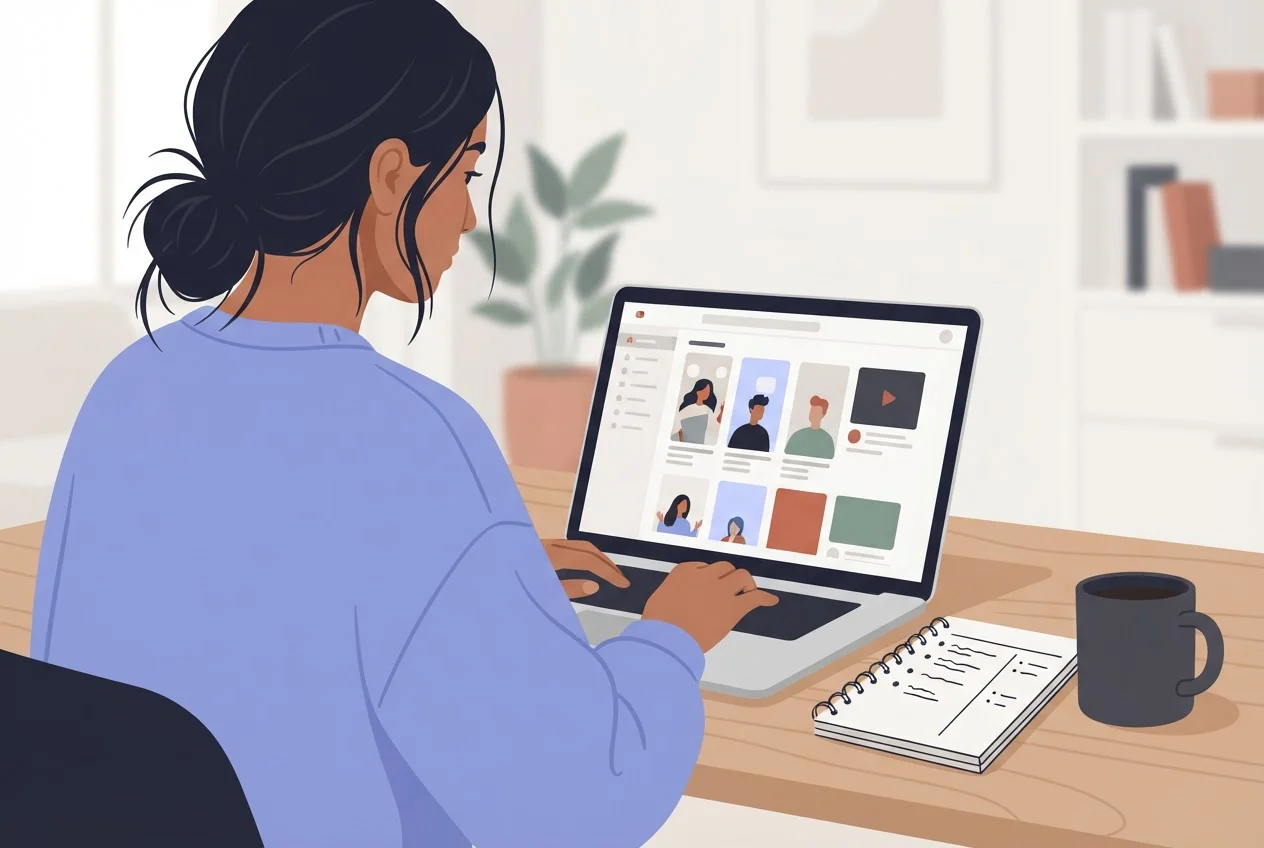
| Creator type | Format | Hook | Offer | Days running |
|---|---|---|---|---|
| Who is on screen and their role to the buyer | How the video is built | First line or on-screen text, word for word | What the ad asks the viewer to act on | Days since the start date the Library lists |
Read each column from the ad itself:
- Creator type: watch the first ten seconds. Note whether the person is a customer, founder, expert or lifestyle user, their rough age, the setting, and whether they speak to camera or narrate.
- Format: name the structure, such as talking head, demo, unboxing, before and after, or screen recording.
- Hook: write the opening line or on-screen text from the first three seconds exactly as it appears.
- Offer: read the headline, caption and end card for a discount, bundle, free shipping, guarantee, or no offer.
Count what repeats in each column, then fill in one sentence: We need a creator type who makes a format video that opens with a hook pattern and ends on an offer.
Worked example for a skincare brand: we need a customer-voice creator in her 30s who films a talking-head demo at a bathroom mirror, opens by naming the skin problem in her first sentence, and ends on a bundle offer.
Use the ads to learn the type of creator, not to chase the person in a rival's ad, who may be under contract.
Where to find UGC creators for ads: six sources
Use six sources: competitor ads first, then Meta's Creator Marketing Hub, social search, marketplaces and agencies, your own customers and tagged posts, and creator communities and referrals. That makes six: competitor ads plus the five channels below.
| Source | Best for | What to check | Limit |
|---|---|---|---|
| 1. Competitor ads (start here) | Writing the creator profile you search with everywhere else | Creator type, format, hook, offer and days running across several brands | Gives you a creator profile, not a creator to contact |
| 2. Meta's Creator Marketing Hub | Finding creators and their existing posts inside Meta's own ad tools | Whether posts match your profile; what permission the creator will grant | Features and availability vary by account, so check what yours shows |
| 3. Social search | Seeing real on-camera style before anyone is contacted | First three seconds of recent videos; whether a demo appears in the portfolio | You find, vet and manage every creator yourself |
| 4. Marketplaces and agencies | Getting several creators quickly with the admin handled | Sample videos in your category; what usage rights come with delivery | You choose only from who is listed; quality varies |
| 5. Customers and tagged posts | A genuine customer voice from people who already use the product | Written permission to run the post; comfort on camera | Small pool; few customers make ad-ready video |
| 6. Communities, referrals, inbound form | Niche specialists and creators who want to work with you | Past work in your category; speed and clarity of replies | Slow to build; hard to compare candidates side by side |
Can Meta's Creator Marketing Hub find UGC creators for you?
Yes: as of November 2026, Meta offers a Creator Marketing Hub that brings creator discovery, outreach and ad permissions into one place (Social Media Today).
Meta launched the Hub on September 15, 2026. Social Media Today's report lists discovery filters for finding relevant creators and content, content recommendations based on your objective, partnership messaging inside the Hub, permissions set per post with expiry dates, and one-click ad creation from listings.
For sourcing, the filters and messaging matter most: search for creators whose existing posts match your profile sentence, then contact them from the same place. Check what your own account shows before building a plan on it. The Hub suits creators who already post about your category, since you work from their own posts.
Our guide to how partnership-ad permissions and creator hooks work covers the next step.
How do you find UGC creators on Instagram?
To find UGC creators on Instagram, search for the video you want made, not only #ugc: type the problem, product type or format from your creator profile into Reels search, and open the creators behind clips that match.
Check each bio for a portfolio link, then watch recent videos with the sound on. The same search works on TikTok. This route costs only time, because you find, vet and manage every creator yourself.
Are UGC creator marketplaces and agencies worth using?
Yes, when speed matters more than a precise match: they let you brief several creators at once and handle delivery, but you choose only from whoever is listed.
They come in three kinds: self-serve marketplaces where you post a brief, agencies that propose creators, and freelance sites for one-to-one work. Paste your creator profile into the brief and ask for samples in your category. Get usage rights in writing; our UGC ads guide to prices and rights covers them, and fee and ad-rights pricing sets out what to pay.
Can your own customers and tagged posts supply creators?
Yes: customers who already post about your product are the most credible creators you can find, and the only ones you can reach without searching.
Look through tagged posts, mentions, reviews and customer emails for people who show the product on camera. Ask in writing first: for permission to run their post as a partnership ad, or for an agreement on new commissioned UGC.
Anyone given something of value for mentioning your product should disclose that relationship, as the Federal Trade Commission (FTC) sets out in its guidance for social media influencers. Our UGC ads guide to permission and FTC rules covers the detail.
Do creator communities, referrals and an inbound form work?
They work for niche specialists, though slowly: communities, referrals and a "work with us" form bring candidates who chose to come to you.
Join groups where UGC creators share portfolios and post your brief in general terms. Ask each creator you work with for one referral. Add a short site form asking for a portfolio link and category experience. Expect fit, not volume.
How do you screen UGC creators quickly before you pay anyone?
Run four checks, each with a clear pass or fail, in one sitting per creator: content fit, the first three seconds, ability to take a brief, and willingness to grant ad permission.
- Content fitWatch three recent videos. Pass: the creator, setting and speaking style match your profile sentence on at least two of creator type, format and hook pattern. Fail: they match on none.
- First three secondsWatch each opening with the sound on. Pass: the viewer learns the problem, product or promise within three seconds. Fail: a greeting, logo or slow lead-in.
- Ability to take a briefSend your profile sentence and ask for two hook ideas. Pass: a reply that uses your brief and arrives when promised. Fail: a generic, late or off-brief reply.
- Willingness to grant ad permissionAsk in writing whether you can run the video as an ad, for how long and from which account. Pass: a clear yes with terms. Fail: a vague answer or a no.
Drop anyone whose fee for ad rights you cannot meet. These four checks are a first filter, not full vetting. For audience quality, written terms and a verdict on each creator, use the full pass, hold or drop scorecard.
How to build a shortlist of UGC creators
Rank every creator who passed the screen on three things only, in this order: match to the creator profile from competitor ads, content fit in the first three seconds, and willingness to grant ad permission. Keep the top three to five.
In our recommendation, a creator who matches a pattern competitors have kept live for weeks ranks above one you simply like, because run time is a clue, though not proof. Test one variable at a time: a different creator, hook or format, never two at once. Write one hypothesis per test, such as: a customer-voice creator who opens with the problem will hold viewers longer than our current ad.
The hypothesis card gives a template. Read each first test only against its hypothesis, then decide the next test from that alone. Influencer marketing return on investment covers measurement after launch, and running creator posts as partnership ads covers launch.
Why do creator choices need data, and why does a steady supply of creative matter?
Choosing a creator is a bet, and evidence from what already runs in your category is a practical way to improve the odds.
According to Aspire's 2026 survey of nearly 900 marketers and creators, 77% of brands repurpose creator content in their paid ads, so choosing a creator is now a media decision as well as a casting one.
Meta ads also tire, so one good creator is a start, not a supply: you need a steady flow of new hooks and formats to replace ads as they wear out, and not every creator video will win. Our guide to performance creative covers what a winning ad costs and how often ads win. Teams that decide from competitor patterns, past results and customer comments can plan the next batch of creators instead of reacting to the last one.
What does Deepsolv Creator Intelligence do?
Deepsolv Creator Intelligence helps brands find brand-fit creators, estimate fair compensation, and measure organic and paid advertising return on investment (ROI) to improve creator selection.
Start this week with the creator profile
Finding UGC creators for Meta ads is faster when you work backwards: read what competitors run, write one creator profile, search six sources with it, and shortlist three to five creators on evidence.
This week, log the creator-led video ads of three direct competitors in the five-column template, write your profile sentence, and send it to the first creators who pass the four-check screen. That is enough to start a first test with one variable and one hypothesis.
Picking creators and deciding what to test next is a data problem as much as a sourcing one. See how Deepsolv helps you understand what's working, why it's working, and what to test next. Book a demo with our founding team.