UGC Ads: What 10 Videos Cost and How to Test Them
UGC ads, paid ads built from creator-filmed footage, cost about $1,045 to $5,000 for ten videos depending on rights and pack size, and a hook-rate test shows which to keep.

By Sachit Sharma, CEO & Founder · Updated 14 Oct 2026

Key takeaways
- Ten UGC videos total about $1,045 to $5,000 on providers' published prices as of October 2026. The spread comes from rights, account access, billing terms and pack size, not video quality (our model below).
- Put the rights in writing before you pay: named videos, United States territory, an end date, edit rights and partnership ads access.
- Disclose the paid relationship early in the video, spoken and on screen, and brief only claims the creator can truthfully make.
- Read hook rate first. About 1,250 impressions per hook can separate a 25% hook rate from a 30% one. A conversion-rate gap of 2.0% versus 2.5% needs about 13,800 clicks per variant (our model).
In this article
- 1What are UGC ads, and which kind should a Meta advertiser buy?
- 2What do UGC ads cost on providers' own price pages?
- 3What do ten UGC videos really cost once rights and fees are added?
- 4What rights should a UGC ad contract spell out?
- 5What do the FTC rules require when creators promote your product?
- 6How many impressions does it take to tell one UGC hook from another?
- 7How do you run a UGC ad test that teaches you something?
- 8How do we decide what a creator should say?
- 9Frequently asked questions
The same ten UGC videos cost $1,045 on one pack platform and $5,000 from one creator, and neither figure is the whole bill. UGC (user-generated content) ads are creator-filmed videos a brand pays to run as ads, and usage rights, access to the creator's account and platform fees all change the total. Collabstr, a creator marketplace, reports its own 2025 average UGC campaign cost at $197 (Collabstr 2026 Influencer Marketing Report).
That gap is where first tests go wrong. A brand buys a pack of videos, learns later that running them from the creator's account costs extra, and then judges the batch on a handful of purchases that cannot separate one video from another.
This page totals a realistic test batch from providers' own price pages, gives you a rights checklist and a cost sheet to fill in, and shows how few impressions a test of the opening seconds, called the hook, needs. It is written for brands and media buyers running Meta ads, not for creators pricing their work.
What are UGC ads, and which kind should a Meta advertiser buy?
UGC ads are paid ads that use footage made by someone other than your brand, usually a creator you commission, filmed on a phone and styled to look native in the feed. The common formats are testimonial, product demo, unboxing and lifestyle.
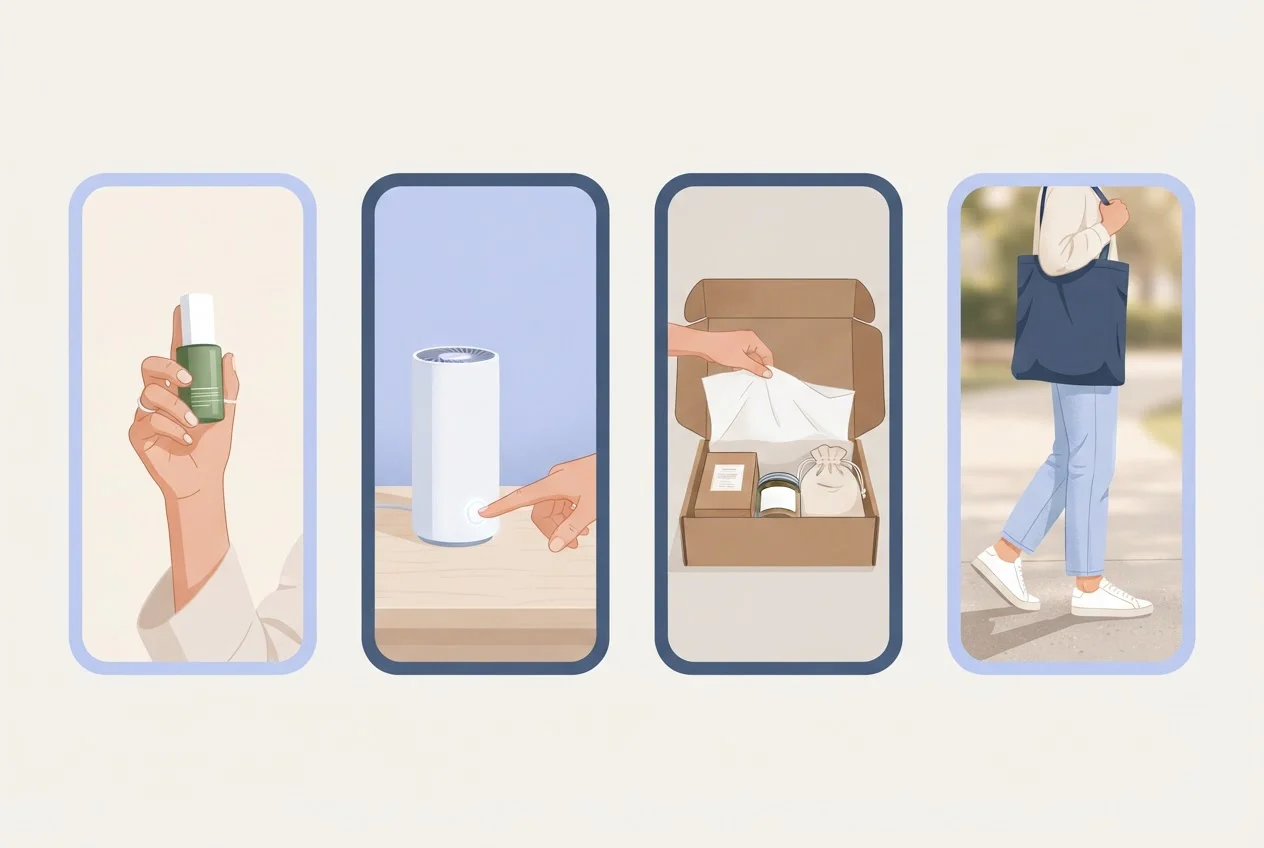
The phrase also describes older campaigns where a brand reposts fans' organic posts. Buy the commissioned kind. You can brief it, price it, put its rights in a contract and test different openings of the same script. Fan posts need separate permission for every use.
What do UGC ads cost on providers' own price pages?
As of October 2026, published prices run from $69.14 per video (the largest pack on Trend) to $500 per concept (one working creator's rate card). What the price bundles matters more than the headline number.
| Source (own page) | Published price | Rights and extras |
|---|---|---|
| $550 for up to 6 videos ($91.67 each), $1,045 for up to 14 ($74.64), $1,980 for up to 28 ($70.71), $3,872 for up to 56 ($69.14) | Full licensing and distribution rights included; credits expire 12 months after purchase | |
| UGC campaigns from $100 per video; Brand plan $1,500 billed quarterly | 10% marketplace fee on the Brand plan; perpetual digital usage rights | |
| $197 average UGC campaign in 2025 | Average across its marketplace | |
| $500 per concept for new clients | Paid-media usage with no expiration in the base rate; running ads from the creator's account $500 a month |
Pack platforms trade a lower price per video for less choice over who films. Individual creators cost more per video but let you control the script and hooks. Neither is better in general. Which one fits depends on whether your bottleneck is volume or a specific voice.
What do ten UGC videos really cost once rights and fees are added?
Ten UGC videos total between $1,045 and $5,000 on these published prices, a spread of about 4.8 times (5,000 ÷ 1,045). The table below is our model: it adds the subscriptions and fees each provider lists, plus usage rights where they are quoted separately.
| Route | Working | Total for 10 | Per video |
|---|---|---|---|
| Trend, 14-video pack | One pack covers up to 14; $1,045 ÷ 10 | $1,045 | $104.50 |
| Insense, Brand plan | 10 × $100 = $1,000, plus 10% fee ($100), plus one quarter of the plan ($1,500) | $2,600 | $260 |
| Marketplace at the Collabstr average | 10 × $197 | $1,970 | $197 |
| Same, rights quoted separately | $1,970 plus 30% to 50% ($591 to $985) | $2,561 to $2,955 | $256.10 to $295.50 |
| One creator at $500 per concept (new-client rate) | 10 × $500; add $500 for one month of partnership ads access | $5,000 ($5,500 with access) | $500 ($550) |
Assumptions: the Insense fee is added on top of creator payments, and the plan is bought for one quarter, its published billing. The 30% to 50% is our planning range for separately priced usage rights, not a published rate. Replace it with the quote you receive. The $500 is a new-client rate and covers one concept with two hooks, so a third opening would be priced extra. The model counts each concept as one video. The Trend pack leaves four videos unused, but its credits last 12 months.
Fill in this sheet for every quote before paying:
A  Base fee x number of videos                    = $____
B  Usage rights (months, flat fee or %)           = $____
C  Partnership ads access (months x monthly fee)  = $____
D  Extra hook openings (count x price)            = $____
E  Platform fee (% of A) + subscription           = $____
Total = A + B + C + D + E
Cost per video you will actually run = Total ÷ videos in use
A blank line in the quote is a fail. Ask what it costs before you sign.
What rights should a UGC ad contract spell out?
A UGC ad contract should name the exact videos, channels, territory, term, edit rights, exclusivity and account access, because each one changes the price and each one is expensive to renegotiate once an ad is winning.
Running ads from a creator's own account is called partnership ads, often known as whitelisting. Meta's branded content policy treats content that features or is influenced by a business partner in exchange for value, such as payment or free gifts, as branded content. It requires the creator to tag the partner with the branded content tool, with the partner's prior permission. Brands send requests and manage account-level creator permissions in the Partnership Ads Hub.
Run this checklist on every agreement:
- Videos named. Pass if every video is listed by file name or ID. Fail if the wording is "content from this campaign."
- Channels. Pass if paid Facebook and Instagram placements are named and organic and website use are included or excluded in writing.
- Territory. Pass if the United States is written in. Fail if blank.
- Term. Pass if there are start and end dates, or a priced "perpetual" line. Fail on "a reasonable period."
- Edits. Pass if cutting, captioning and swapping the opening are allowed in writing. Hook tests require re-edits.
- Partnership ads. Pass if scope (one post or the whole account), months and monthly fee are written and permission is granted through Meta's tools. Fail if the plan is to log into the creator's account.
- Exclusivity. Pass if the agreement says yes or no. If yes, the competitor category is named and priced.
- Claims. Pass if the creator used the product before filming and you can substantiate every claim in the script.
- Disclosure. Pass if the brief requires a spoken and on-screen disclosure early in the video.
- Ending. Pass if the agreement says what happens to live ads when the term or permission ends.
What do the FTC rules require when creators promote your product?
The Federal Trade Commission (FTC) requires paid creators to disclose their material connection to the brand, and it holds the brand responsible for what creators say. Treat disclosure and claims as part of the creative brief, not as a legal review at the end.
The FTC's Consumer Reviews and Testimonials Rule took effect on October 21, 2024. It prohibits fake or false testimonials, including ones attributed to people who did not use the product, and courts can impose civil penalties for knowing violations.
The FTC's Endorsement Guides questions and answers add that advertisers need reasonable programs to train and monitor the creators who promote them. A disclosure in both the visual and audio parts of a video is more likely to be clear and conspicuous. Viewers are more likely to miss one at the end. Our recommendation is to disclose in the first seconds, aloud and on screen, and to keep a record of what each creator was told.
How many impressions does it take to tell one UGC hook from another?
About 1,250 impressions per hook is enough to tell a 25% hook rate from a 30% one. Telling a 2.0% conversion rate from 2.5% takes about 13,800 clicks per variant. Both figures are from our model, so read hook rate first.
Hook rate is 3-second video plays divided by impressions, multiplied by 100 (see our hook rate guide). The model is the standard two-proportion sample size, with 95% confidence and an 80% chance of catching a real difference:
n per variant = (1.96 + 0.84)² × [p₁(1 − p₁) + p₂(1 − p₂)] ÷ (p₁ − p₂)²
- Hook rate, 25% vs 30%: 7.84 × (0.1875 + 0.21) ÷ 0.0025 = about 1,247, so roughly 1,250 impressions per hook. At an assumed $15 CPM (cost per thousand impressions; use your account's figure), that is about $19 per hook.
- Conversion rate, 2.0% vs 2.5%: 7.84 × (0.0196 + 0.024375) ÷ 0.000025 = about 13,790 clicks per variant.
In our view, treat these as floors, because uneven delivery between ads can mean one hook needs more impressions to reach the same confidence.
For a baseline, Billo's H1 2026 benchmark measured 88,329 sales-objective Meta video ads that ran from January to June 2026, with $122 million in spend. The cross-industry average hook rate was 25.44%, Health & Beauty 28.11% and Apparel & Accessories 22.94%. It covers video ads of every style, not only creator footage, so your own account's video average is the better yardstick.
How do you run a UGC ad test that teaches you something?
Test one customer belief at a time: one creator, one script body, three different openings. Hook changes are cheaper to film and cheaper to read than new creators, and they tell you what stops the scroll before you spend on conversions.

Use a brief like this (our ad creative brief template has the full version):
Belief to test: [one customer belief or objection, in customer words]
Creator and body: [one creator, one script body, filmed once]
Hooks: A [...]  B [...]  C [...]   (same body, three openings)
Budget: equal across the three; same audience and landing page
Read 1: hook rate once each hook has about 1,250 impressions
Read 2: conversions only when the winning hook has enough clicks
Kill rule: [hook rate below your account's video average]
Rights: [term, channels, partnership ads months]
Take the leading hook forward on this test. Pass: each hook has at least 1,250 impressions, the leader's hook rate is at least 5 percentage points above the next hook, and it is above your account's video average. Fail: anything less; keep testing or change the belief. Then judge the winning video on conversions using the click count above.
How do we decide what a creator should say?
We start from what your customers already say, because a creator is believable when the belief in the script is one buyers actually hold.
Deepsolv is a creative intelligence platform for Meta advertising teams. We combine ad-performance data, competitor activity, customer signals such as reviews, comments, direct messages (DMs) and Reddit, and past ad learnings into a ranked weekly test plan, delivered every Monday, and into execution-ready creative briefs. That is how a team arrives at the brief above with a belief and openings worth testing, rather than guessing. Our AI creative strategist page shows how we rank the next test.
See Deepsolv pricing.
Start from what your customers already say
Frequently asked questions
Yes, as long as the avatar is not presented as a real customer. The FTC says its Consumer Reviews and Testimonials Rule has no blanket prohibition on AI-generated avatars, but a testimonial from someone who does not exist or never used the product is fake. Present the avatar as a spokesperson or demonstration, make no first-person customer claims, and disclose the paid relationship.
Sources
- 1.Collabstr 2026 Influencer Marketing Report
- 2.Trend pricing
- 3.Insense pricing
- 4.UGC Social: one creator's published rate card
- 5.Billo: Video Ad Hook Rate Benchmarks H1 2026
- 6.FTC: Consumer Reviews and Testimonials Rule, Questions and Answers
- 7.FTC: Endorsement Guides, What People Are Asking
- 8.Meta: Branded Content Policies
- 9.Meta: Partnership Ads Hub account-level permissions