Deepsolv Blog
Deepsolv Blog
Backed by









Creative Decision Intelligence for Meta growth teams. Know what to test next — before you spend on it.
Follow Deepsolv on InstagramFollow Deepsolv on LinkedInFollow Deepsolv on TwitterAll rights reserved © 2026 deepsolv.ai
5 min read
Published: 12/2/2025
You’re posting consistently.
Your visuals are sharp.
Your captions are thoughtful.
And yet, your numbers refuse to move.
Reach is flat. Engagement feels unpredictable. Growth has slowed to a crawl.
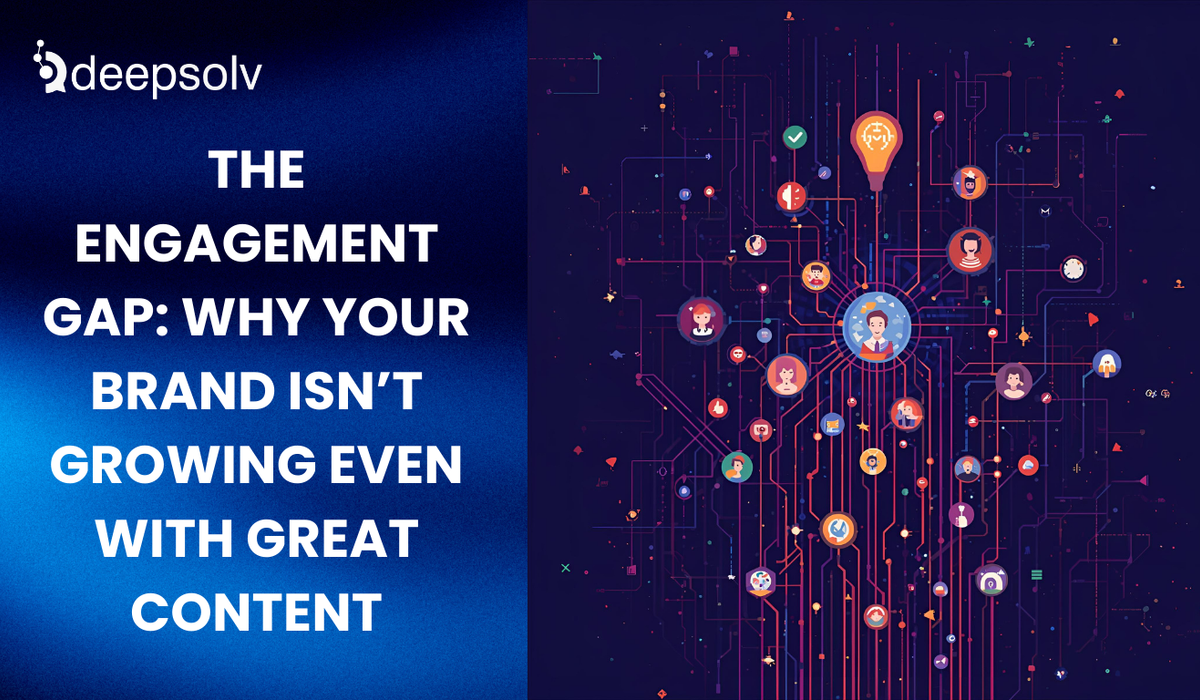
If this sounds familiar, you’re not failing at content. You’re experiencing what many brands are now quietly running into: the engagement gap.
In 2025, the relationship between “good content” and actual performance has broken. Brands that should be growing are stuck, while others with seemingly simpler content are compounding attention, reach, and revenue. This gap is especially visible on Instagram, where traditional playbooks no longer work the way they once did.
This is where most brands start searching for ways to fix low Instagram engagement, but the real issue goes deeper than formats or posting frequency. It’s about how Instagram has fundamentally changed, and how brands are still optimising for a version of the platform that no longer exists.
For years, social media growth followed a simple logic:
Better visuals + better copy = better engagement.
That assumption is no longer true.
Instagram has shifted from a social graph (content from people you follow) to an interest graph (content predicted to hold your attention), and now, in 2025, to a retention-first AI system. The platform doesn’t reward effort. It rewards signals.
Likes, once the primary currency, are now among the weakest indicators. What Instagram actually values today happens mostly out of sight:
This is why brands with objectively “great” content often struggle to improve Instagram reach, while others scale rapidly with content that feels more raw, conversational, or even imperfect.
The engagement gap is not a creative failure. It’s a strategic mismatch.
One of the biggest mistakes brands make is talking about “the algorithm” as if Instagram has just one brain.
It doesn’t.
Instagram in 2025 is a system of multiple AI ranking engines, each rewarding different behaviours.
Feed and Stories are governed by closeness. Instagram prioritises accounts users have a history with, especially those they:
For brands, this is where many hit a wall. Polished posts without two-way interaction signal distance. Over time, the algorithm quietly deprioritises them, creating a visibility spiral where fewer people see the content, leading to even less engagement.
This is why many Instagram engagement tips for brands fail in practice. They optimise the post, not the relationship.
Reels and Explore work differently. They care far less about who you are and far more about whether you can hold attention.
The first 2–3 seconds determine everything.
If viewers scroll past quickly, distribution stops. It doesn’t matter how good the rest of the video is. This explains why high-production brand videos often underperform while lo-fi, phone-shot clips outperform them dramatically.
Brands that understand this separation build two content muscles:
Brands that don’t get stuck in the engagement gap.
Another uncomfortable truth: likes are easy, but meaningless.
Instagram now weighs actions that require intent far more heavily:
This is why many brands feel invisible even when posts look “successful” on the surface. They’re optimising for public approval, not behavioural commitment.
If you’re trying to fix low Instagram engagement, the goal isn’t more likes. It’s more reasons for someone to come back, remember you, or talk to you privately.
Here’s something most analytics dashboards won’t show you:
The majority of your audience is watching silently.
Up to 90% of users consume content without liking or commenting. They screenshot, save, and send posts in DMs or group chats. This is known as dark social, and it’s where a lot of real influence now lives.
Brands that rely only on visible engagement underestimate their actual impact and miss opportunities to activate this silent majority.
The smartest brands now design content that invites private action:
Private interactions do two things simultaneously:
Once someone messages you, your future content is far more likely to show up in their feed.
This is where platforms like Deepsolv quietly become a growth advantage. When brands can respond instantly, on-brand, and at scale inside DMs or comments, they convert passive attention into active relationships without burning out their teams. The user feels seen, and the algorithm notices the depth of interaction.
When engagement drops, the instinct is to post more.
In reality, many brands are suffering from format fatigue. Audiences adapt quickly. What worked six months ago now blends into the background.
Accounts that perform best typically use a deliberate mix:
Carousels, in particular, have become quietly powerful. They encourage dwell time, swiping, and saving, all of which signal value to the algorithm. A single well-structured carousel can outperform multiple Reels in terms of long-term reach.
If everything you post looks and feels the same, the algorithm assumes it’s predictable, and predictable content rarely gets amplified.
Hashtags still matter, but they are no longer the growth lever they once were.
Instagram now behaves like a semantic search engine. It understands:
When users search, Instagram doesn’t just look for exact keywords. It looks for meaning.
This is why brands that optimise captions, bios, and even filenames around intent are seeing more consistent discovery. If your audience is actively searching for solutions, educational content aligned with that intent compounds over time.
This is also why evergreen topics around fixing low Instagram engagement or how to improve Instagram reach continue to perform months after publishing, especially when paired with saves-driven formats like carousels.
Gymshark’s growth wasn’t built on better product shots. It was built on participation.
Campaigns like Gymshark66 didn’t push products. They invited people into a shared challenge. Users documented progress, tagged the brand, and interacted with each other. Gymshark became the facilitator of identity, not just apparel.
Engagement scaled because the brand wasn’t the centre of attention. The community was.
Duolingo’s TikTok and Instagram success came from abandoning corporate tone. Their mascot became self-aware, humorous, and reactive to comments.
The result? Comment sections turned into conversations. Users came back not just for content, but to see how the brand would respond. That loop of interaction is algorithmic gold.
This is a reminder that community management isn’t reactive support. It’s a growth channel when done intentionally.
Glossier famously treats Instagram DMs like a front-line sales and research channel. Customer questions, product feedback, and repeat interactions all happen privately.
Brands that operationalise this level of responsiveness, especially with the help of intelligent automation, don’t just see better engagement. They see higher lifetime value because conversations compound trust.
Here’s the uncomfortable part.
Brands that don’t adapt aren’t just missing likes. They’re missing:
When comments go unanswered or DMs sit unread, the algorithm reads that as disinterest. So do users.
This is where brands quietly lose ground to competitors who appear more present, more responsive, and more human, even if their content isn’t objectively better.
Closing the engagement gap doesn’t require more posting. It requires:
Brands that do this consistently don’t chase virality. They build momentum.
If you want to go deeper into adjacent strategies, you might also find value in:
The future of Instagram growth isn’t louder content. It’s closer brands.
Brands that respond.
Brands that remember.
Brands that follow up.
The engagement gap exists because attention has shifted from public to private, from vanity to value. Closing it means meeting users where they already are, and doing it faster, smarter, and more personally than most brands can manage manually.
If you’re serious about fixing low Instagram engagement and not just masking it, now is the moment to rethink how your brand shows up in conversations, not just feeds.
👉 Schedule a free strategy call with Deepsolv and see how brands that move early are turning missed interactions into measurable growth. The longer you wait, the more compounding attention you leave on the table.
FAQs
Frequently asked questions related to this blog post