Deepsolv Blog
Deepsolv Blog
Backed by



Creative Decision Intelligence for Meta growth teams. Know what to test next — before you spend on it.
Follow Deepsolv on InstagramFollow Deepsolv on LinkedInFollow Deepsolv on TwitterAll rights reserved © 2026 deepsolv.ai
8 min read
Published: 2/9/2026
ChatGPT can analyze screenshots of competitor ads in seconds. Upload an image, ask the right questions, and get instant breakdowns of messaging strategy, value propositions, target audience, and creative patterns.
But here's what most marketers miss: ChatGPT tells you WHAT competitors are doing. It can't tell you WHY it works, WHICH patterns will work for your ICP, or WHAT to test next.
This guide shows you how to use ChatGPT (and Claude) for competitor ad analysis, the exact prompts that extract strategic insights, and when you need creative intelligence instead of just ad surveillance.
Manual competitor research is brutal:
AI accelerates this by 10x. Upload a competitor's ad, and ChatGPT instantly extracts:
But speed isn't the only advantage. AI helps you analyze at scale—20 competitor ads in 10 minutes vs. 3 hours manually.
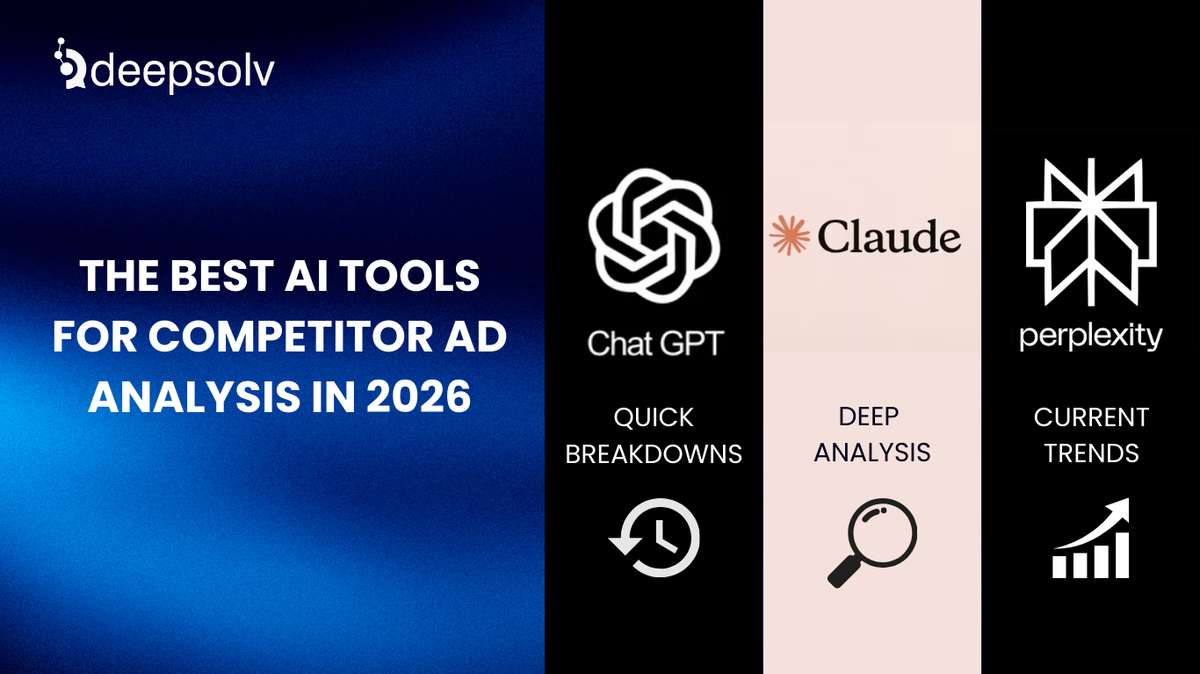
ChatGPT — Quick Ad Breakdowns Image analysis (GPT-4o), fast responses, simple prompts. Best for analyzing 5-10 ads quickly, extracting copy frameworks. Limited: smaller context window, generic insights.
Claude — Deep Strategic Analysis 200K token context window (20+ ads + guidelines at once), superior strategic thinking, natural writing. Best for deep analysis, strategic recommendations, entire campaign sets. Limited: slower for simple tasks.
Perplexity — Current Campaign Research Web search integration finds live campaigns, citations, current market data. Best for discovering what's running now, finding trends, validating insights. Limited: not for deep ad analysis.
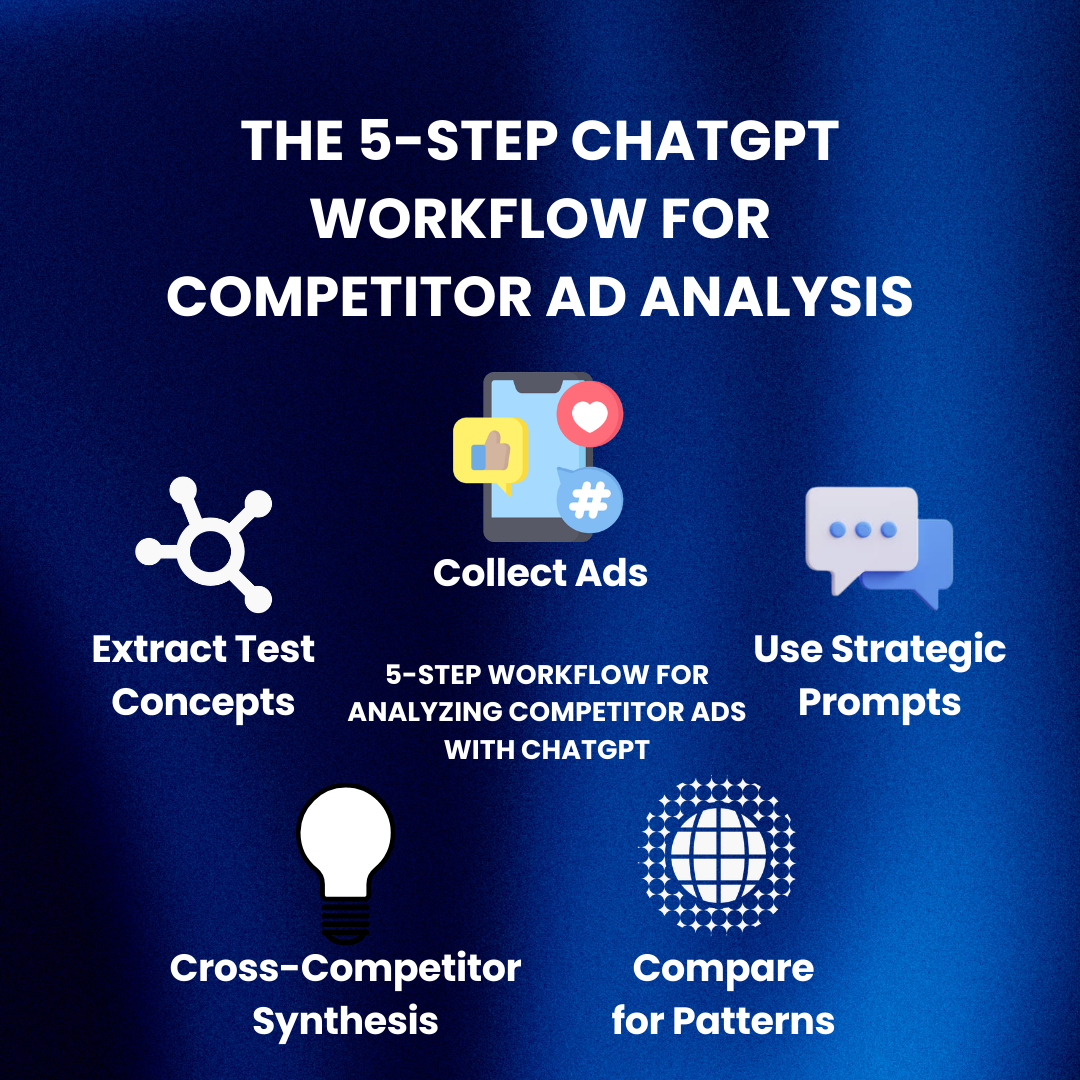
Step 1: Collect Competitor Ads Meta Ads Library → Screenshot 10-20 ads (different formats, angles, products, ads running 30+ days).
Step 2: Use Strategic Prompts Bad: "Analyze this ad." Good: "Extract: 1) Primary value proposition, 2) Target audience signals, 3) Hook framework, 4) Objections addressed, 5) CTA strategy. Format as structured breakdown."
Step 3: Compare for Patterns Upload 3-5 ads from same competitor. Prompt: "Identify recurring patterns in messaging themes, emotional appeals, visual styles, offer structures. What's their core creative strategy?"
Step 4: Cross-Competitor Synthesis After analyzing 3+ competitors: "What creative patterns work across this niche? Which messaging angles appear most? What gaps exist?"
Step 5: Extract Test Concepts "Create 3 testable ad concepts for [your brand]. Include hook, value prop, objection handling, CTA. Differentiate from competitors while leveraging proven patterns."
1. Complete Ad Breakdown "Analyze this ad and extract: 1) Core value proposition, 2) Target audience (demographics + psychographics + pain points), 3) Hook framework (first 3 seconds attention grab), 4) Objections addressed, 5) CTA strategy and urgency tactics."
2. Competitive Pattern Recognition "I've uploaded 5 ads from [Competitor X]. Identify recurring patterns in messaging themes, emotional appeals, visual styles, and offer structures. What's their core creative strategy?"
3. Cross-Competitor Synthesis "Based on analyses of Competitor A, B, and C, what creative patterns work across this niche? Which messaging angles appear most? What gaps exist that none address?"
4. Strategic Gap Identification "Based on this competitive analysis, identify 3 opportunities my brand can exploit: underserved segments, unaddressed objections, missing emotional appeals, or saturated angles to avoid."
5. Actionable Test Concepts "Create 3 testable ad concepts for [your brand]. Include: hook, value prop, objection handling, CTA. Differentiate from competitors while leveraging proven patterns."
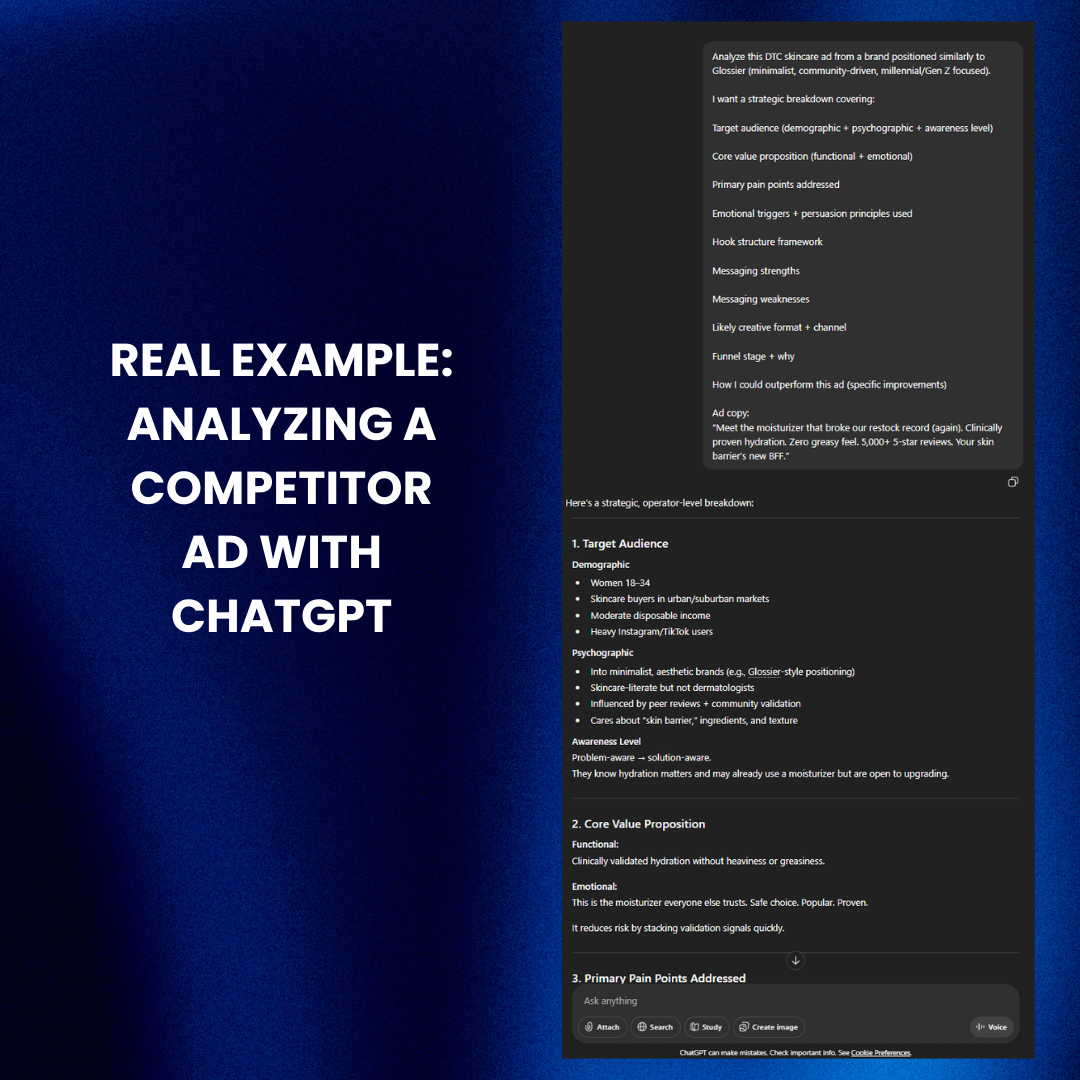
Let's say you upload a DTC skincare brand's ad screenshot.
Prompt: "Analyze this Meta ad for a skincare product. Extract the value proposition, target audience, hook strategy, and objection handling."
ChatGPT Response: "Value Proposition: This ad promises 'visible results in 14 days without harsh chemicals' targeting results-driven buyers who want efficacy without skin irritation.
Target Audience: Women 28-45, skincare enthusiasts, previously tried harsh products (retinol, acids) with sensitivity. Psychographic: health-conscious, ingredient-aware, willing to pay premium for clean beauty.
Hook Strategy: Opens with problem statement: 'Tired of products that promise results but damage your skin?' Creates immediate identification with frustrated buyers.
Objection Handling: Addresses 3 objections: 1) 'Results take months' → countered with '14-day visible change' timeframe, 2) 'Natural products don't work' → dermatologist-tested claim, 3) 'Expensive/risky' → 60-day money-back guarantee."
Now you have structured intel you can act on.
ChatGPT and Claude hit a ceiling:
Performance Metrics Are Invisible: AI can't tell you which ads drove highest ROAS, which fatigued after 7 days vs. 60 days, which audiences converted best, or what CPA each delivered.
Trend Timing Is Unknown: AI identifies that competitors use UGC testimonials but can't tell you when this started, if it's gaining momentum or saturating, or whether you're early or late.
ICP-Angle Fit Is Guesswork: ChatGPT sees "save time" messaging but doesn't know if it resonates with YOUR ICP, which segment cares most, or what angle works better for you.
Strategic Direction Is Missing: AI gives observations, not which 3 concepts to test first, how to prioritize budget, production-ready briefs, or confidence you're testing the right patterns.
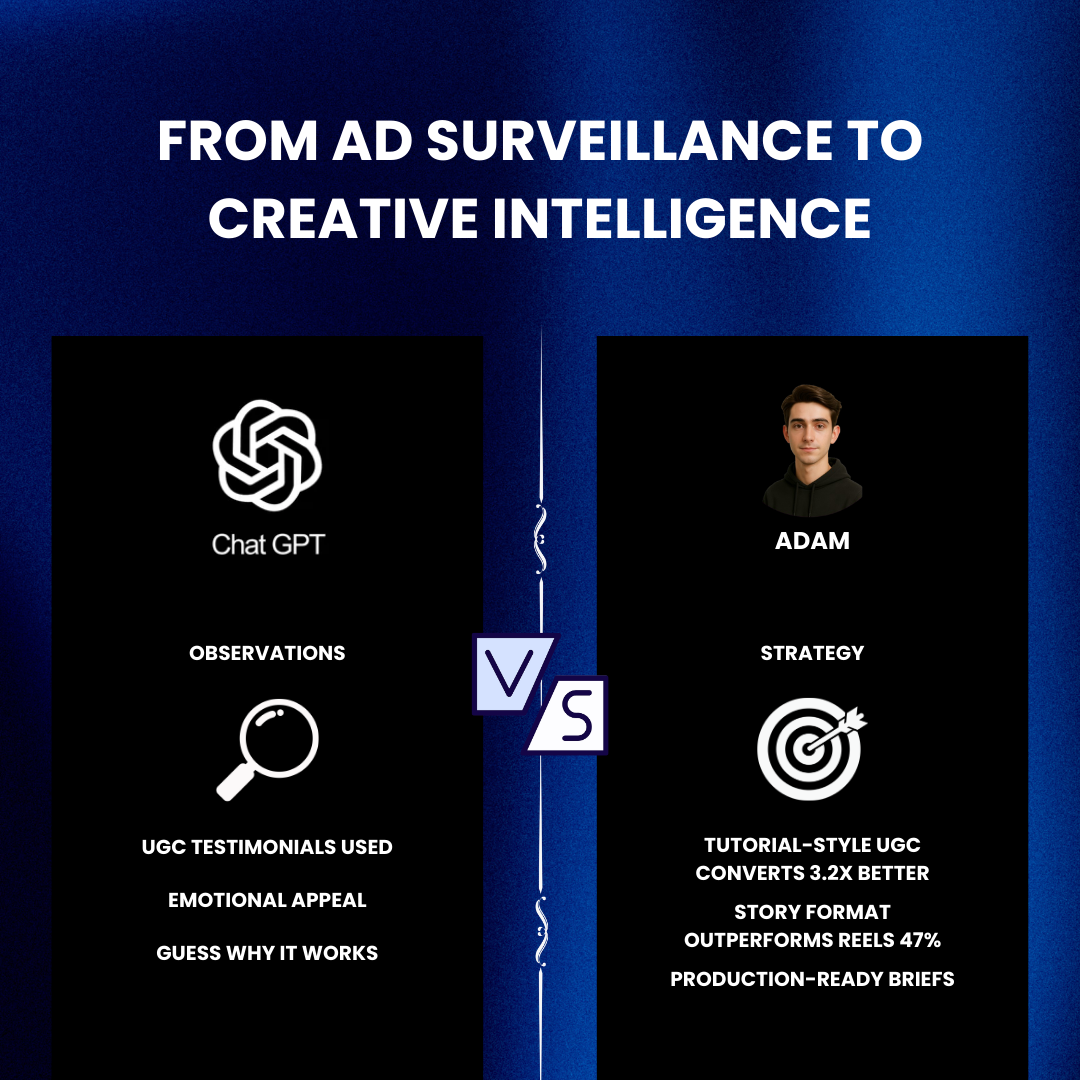
This is where tools like Adam by Deepsolv change the equation.
Adam isn't an ad spy tool. It's creative decision intelligence.
Here's the difference:
ChatGPT Workflow:
Adam Intelligence Workflow:
Example:
ChatGPT tells you: "Competitor X is using UGC testimonials."
Adam tells you: "Tutorial-style UGC from consultants converts 3.2x better than testimonial UGC from end-users for B2B SaaS targeting IT managers. Story-format outperforms Reels 47% when showing workflow improvements. This pattern started 14 days ago with 23% week-over-week velocity increase. Here are 3 production-ready briefs tailored to your ICP."
One gives you observations. The other gives you strategy.
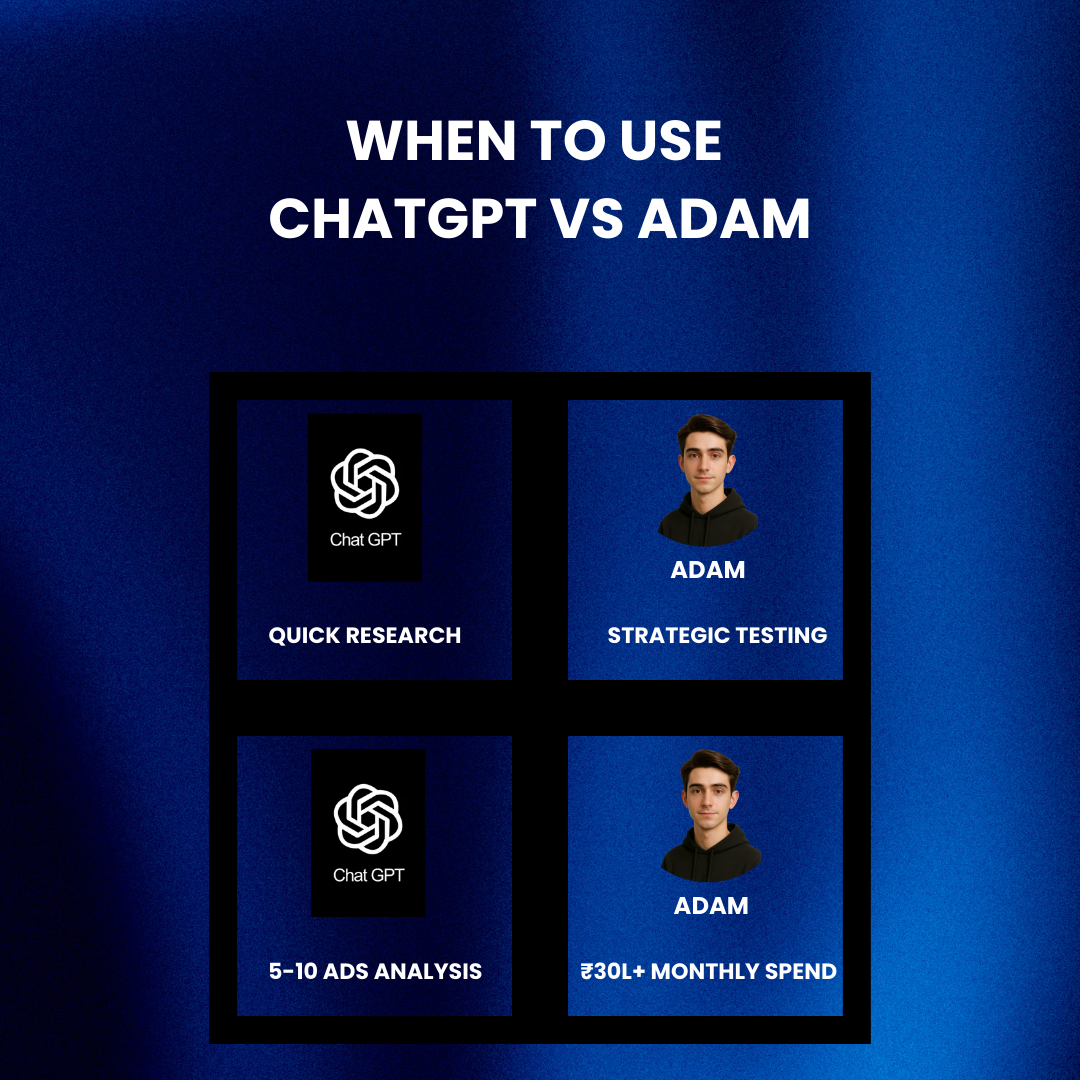
Use ChatGPT when:
Use Adam when:
ChatGPT accelerates research. Adam accelerates results.
ChatGPT and Claude make competitor ad analysis 10x faster. But speed without direction just gets you to the wrong conclusion faster.
If you're spending ₹30L+ monthly on Meta Ads and still making creative decisions based on screenshots and AI guesses, you're competing with incomplete intelligence.
Adam by Deepsolv doesn't just analyze competitor ads. It identifies which creative patterns, angles, and ICP alignments will drive performance for YOUR brand before you spend a rupee on testing.
Stop wasting testing budget on concepts that never had a chance. Start testing strategically, backed by creative decision intelligence.
Book your 7-day free trial and see which creative patterns will actually work for your ICP.
FAQs
Frequently asked questions related to this blog post