
TL;DR
We use Reddit sentiment tools to find purchase objections by preserving thread context, separating firsthand evidence from noise, and clustering recurring barriers instead of counting positive or negative mentions. We compare collection routes, explain a five-step evidence workflow, and show how we turn validated customer language into privacy-aware creative hypotheses and measurable tests.
Reddit Sentiment Tools for Purchase Objections
Reddit reported Q2 results of 130.3 million daily active uniques in Q2 2026. That scale makes it a valuable source of buyer language, but volume alone does not reveal why people hesitate to purchase.
Reddit sentiment tools for purchase objections work when they preserve thread context, separate firsthand experience from speculation, and cluster recurring reasons people delay, reject, or switch products. The strongest workflow combines sentiment with intent, topic, product, and journey-stage labels, because raw mention counts cannot distinguish a buying barrier from an unrelated complaint.
We explain what to compare, how to validate source evidence, and how we turn a credible objection into a creative test without misrepresenting the people behind the feedback.
What Are Reddit Sentiment Tools for Purchase Objections?
A sentiment score describes tone. A purchase objection explains friction in a decision. Someone can sound neutral while asking the question that blocks a sale, or sound frustrated about a support issue that should never change an ad.
We treat Reddit research as customer-signal analysis, not an engagement report. That means looking for an identifiable product, a decision point, a stated barrier, and enough surrounding context to judge what the person actually means. Our customer signals framework keeps that qualitative evidence separate from campaign performance, so useful language can inform a hypothesis without becoming a claim of causation.
The objection taxonomy should be practical enough for a strategist to use:
- Price: The cost feels unjustified, unclear, risky, or difficult to compare.
- Trust: The buyer doubts the brand, claim, guarantee, security, or delivery promise.
- Fit: The buyer is unsure whether the product works for their use case, identity, size, skill level, or environment.
- Switching: The buyer sees migration effort, learning cost, or disruption in leaving a current option.
- Proof: The buyer needs credible evidence before believing the promised outcome.
- Usability: The buyer expects setup, operation, or maintenance to be too difficult.
- Availability: The buyer worries about stock, geography, timing, support, or access.
- Risk: The buyer fears a bad result, hidden downside, lock-in, safety issue, or wasted spend.
Which Tools Preserve Buyer Context?
The best route depends on whether your team needs fresh monitoring, historical discovery, permissioned community analysis, or a creative workflow that turns evidence into next actions. We compare capability profiles because a tool is only useful if its collection method, source access, and export trail match the decision you need to make.
| Tool Profile | Source Access | Context Preservation | Objection Extraction | Exports And Integrations | Setup And Privacy | Published Price Status |
|---|---|---|---|---|---|---|
| Native Reddit Collection Route | Approved API or licensed access | Requires post, root, parent, subreddit, timestamp, permalink, and deletion state | Fully configurable taxonomy | JSON, CSV, API, or warehouse pipeline | Technical setup, strict deletion handling | Separate agreement may be required |
| Permissioned Community Connector | Approved servers and channels only | Requires channel, reply relationship, timestamp, and access state | Strong for owned community feedback | Controlled API or export | Moderate setup, permission-led | Confirm directly with provider |
| Social Listening Suite | Coverage depends on contract and source agreement | Verify nested replies before purchase | Often starts with sentiment and topics | Dashboard, alerts, CSV, or API vary | Lower setup, verify retention controls | Usually quote-based |
| Qualitative Research Workspace | Imports approved exports | Strong when source fields are mandatory | Flexible coding and human review | CSV, slides, repository connections vary | Low to moderate setup | Provider-specific |
| Deepsolv | Publicly described customer-signal inputs include reviews, comments, DMs, Reddit discussions, and audience conversations | Preserves evidence fields for reviewable decisions | Objections, desires, trust gaps, and buying triggers | Confirm source scope during implementation | Built for growth and creative workflows | Tailored quote |
Native Collection Routes
Native collection gives teams the most control over fields, filters, and analysis logic. It also creates the most responsibility: record where each item came from, when it was collected, whether it remains available, and what conversation sits around it.
Current Reddit API terms state that commercial use, research above rate limits, and uses not expressly permitted may require a separate agreement. We never treat browser scraping, deleted material, or partial thread snippets as a shortcut around that requirement.
Permissioned Community Data
Discord can add high-context feedback from an owned or approved community, but it is not interchangeable with public Reddit research. Message content access has approval and permission requirements, so teams should collect only what their application and community governance allow.
For this route, we keep the source channel, reply chain, collection permission, and retention rule attached to every record. That boundary protects both the analysis and the people whose conversations created it.
Monitoring and Social Listening Tools
Monitoring tools are useful for fresh mention detection, launch response, and recurring keyword checks. They are weaker when they flatten a long thread into a single positive, neutral, or negative label.
Before choosing one, ask whether it captures replies, preserves parent context, exports evidence links, supports a custom objection taxonomy, and identifies content that has since been deleted. A low-effort dashboard is not automatically a low-risk research workflow.
Creative Decision Workflows
We use Deepsolv when the goal is not simply to monitor feedback, but to connect customer language with a ranked decision about what to test next. Our pricing is scoped through a tailored conversation because the right source coverage, account connections, and retention requirements depend on the team’s workflow.
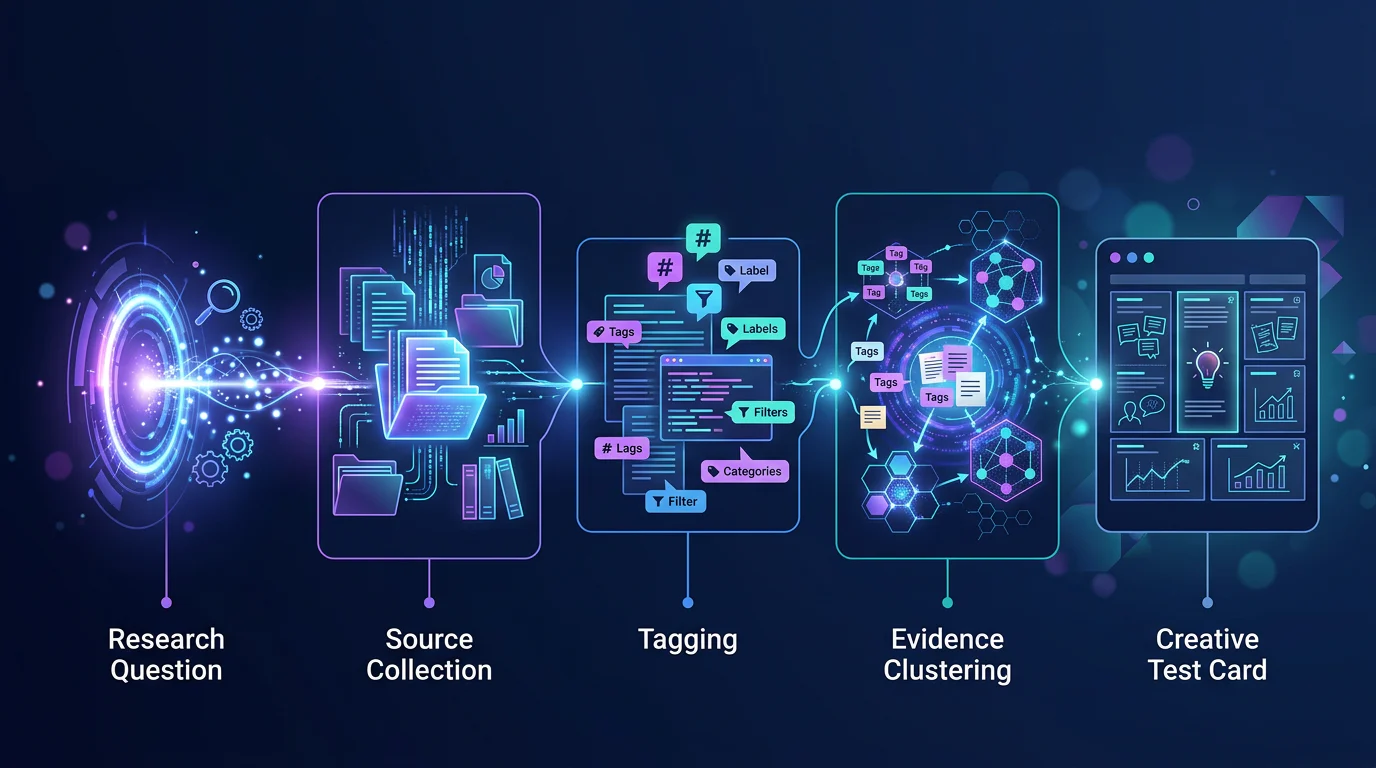
How Do We Extract Buying Objections in Five Steps?
We start with the decision, not the data source. A broad request to “analyze sentiment” produces broad summaries, while a precise question such as “What stops first-time buyers from trusting this offer?” produces a research frame a creative team can actually use.
| Step | What We Do | What We Preserve | Decision Output |
|---|---|---|---|
| Define The Research Frame | Set product, audience, geography, timeframe, and decision | Search terms, approved communities, exclusions | A focused collection brief |
| Collect Eligible Evidence | Gather permitted Reddit, review, and community records | Source type, URL or ID, timestamp, thread root, parent reply | A traceable evidence set |
| Apply Consistent Labels | Tag intent, sentiment, product, journey stage, and objection | Firsthand status, ambiguity, source context | Structured objection records |
| Cluster And Review | Group repeated barriers without removing examples | Independent voices, dates, communities, representative excerpts | Evidence-ranked themes |
| Create A Test Card | Turn approved themes into one measurable hypothesis | Claim requirements, owner, metric, guardrail | A testable creative decision |
We label the speaker before we label the objection. “I heard this product is difficult” is hearsay. “I will not buy until I know whether it works with my existing setup” is firsthand purchase consideration. A joke, copied reply, support ticket, or promotional post may still matter operationally, but it should not inflate a buyer-objection cluster.
Thread context matters most in the third and fourth steps. We retain the original post, parent reply, and exact response relationship, then separate quoted speech from the writer’s own view. Our test planning process uses that evidence trail to keep a vivid comment from outranking a repeated, decision-relevant pattern.
How Do We Separate Evidence from Noise?
A recurring theme deserves action only when we can explain who said it, what they meant, where it appeared, and why it affects a purchase decision. We score evidence to make that judgment explicit instead of letting the loudest comment dictate strategy.
Score Firsthand Purchase Evidence
| Criterion | 0 Points | 1 Point | 2 Points |
|---|---|---|---|
| Firsthand Proximity | No decision or experience signal | Indirect or unclear experience | Clear firsthand consideration, use, or switching decision |
| Context | Isolated fragment | Partial surrounding context | Root, parent, product, and condition retained |
| Specificity | Generic emotion | Barrier or outcome only | Barrier, condition, and consequence are explicit |
| Independent Recurrence | One speaker or copied activity | Limited repetition | Repeats across distinct people, dates, or communities |
| Source Integrity | Deleted, spam, or unusable | Some uncertainty | Permitted, traceable, reviewable record |
A score of eight to ten can support a creative or landing-page hypothesis. Five to seven is exploratory and needs more evidence. Four or below should not become a targeting cue, performance claim, or new angle.
Once a theme clears that threshold, our angle tracking records how the hypothesis performs after launch, so feedback context stays tied to the decision.
Preserve Conversation Context
Sarcasm, slang, and qualified praise are the main reasons a one-line sentiment label fails. Conversation context research shows why surrounding exchanges matter for interpreting sarcastic online language, so we mark ambiguous examples for human review rather than forcing an automated verdict.
We also treat deleted material as withdrawn from active analysis. The evidence ledger can retain only the minimum compliance record needed to prevent accidental re-ingestion, not reusable text, usernames, or a quote that no longer belongs in the workflow.
Keep Source Types Separate
Reddit often reveals pre-purchase comparison language. Reviews tend to describe post-purchase outcomes. Permissioned community messages may expose questions and friction among people already connected to a brand.
We compare these sources after analyzing them independently. Our comment analysis workflow follows the same principle: customer language can clarify an objection, but source type and context determine what conclusion it can support.
How Do We Turn Objections into Creative Angles?
A validated objection does not tell us to repeat a customer’s sentence in an ad. It tells us to decide whether the right response is an answer, clearer qualification, better proof, a new message, or an operational investigation.
For example, “too expensive” is not yet an angle. “The price feels risky because the buyer cannot tell how long the product will last” creates a sharper hypothesis: test an approved durability proof point, then measure whether the revised message improves the intended conversion outcome without increasing low-quality demand.
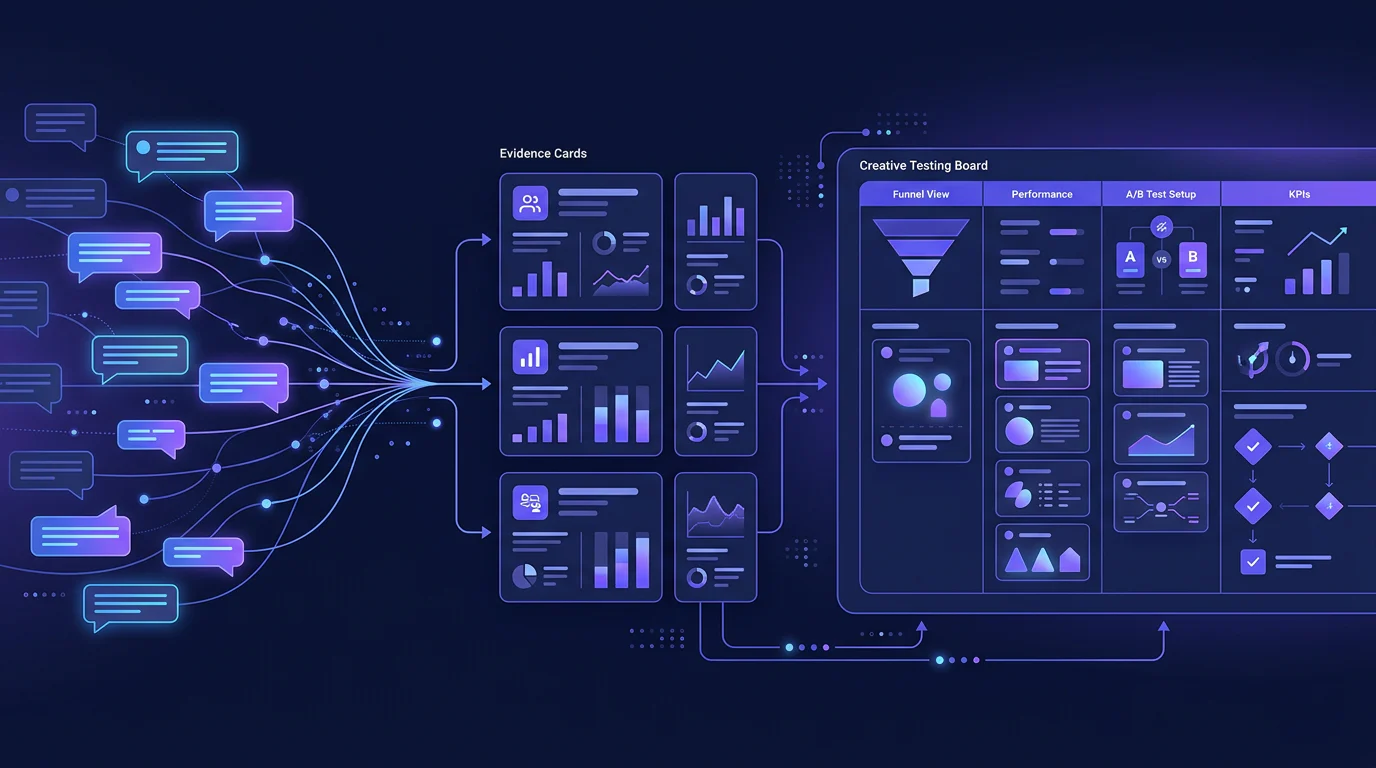
We turn every approved cluster into a test card with one primary change, an evidence score, the relevant journey stage, a claim-review requirement, a primary metric, and a guardrail. Our concept prioritization system helps teams rank those cards by evidence strength and expected learning, not by how dramatic a single quote sounds.
We also keep creative performance separate from feedback volume. The customer signal explains why an angle may deserve a test. The result determines whether we keep, revise, or stop it.
When customer language becomes advertising, truthfulness still matters. The FTC’s FTC guidance explains that featured consumer reviews can become testimonials, so we require approved proof before any customer-derived message becomes a public claim.
How Deepsolv Turns Feedback into Tests
At Deepsolv, we help growth and creative teams move from scattered customer language to a defensible next test. We bring together permitted feedback, reviews, audience conversations, competitive context, historical creative, and performance signals, then keep the evidence attached to the recommendation. That means your team can see whether a proposed angle addresses a recurring barrier, what people actually said, how strong the support is, and what result would change the decision.
We do not treat a sentiment chart as a verdict. Our workflow helps teams classify objections, preserve source context, flag ambiguity, and turn approved patterns into test cards with a clear owner, metric, and guardrail. We also keep customer signals distinct from conversion evidence, so an interesting conversation does not become an inflated performance claim. If you need a practical, privacy-aware route from feedback to next-week creative decisions, book a demo
FAQs on Reddit Sentiment Tools for Purchase Objections
These answers set practical boundaries. They protect evidence quality.
How Often Should Teams Run Reddit Sentiment Analysis?
Run alerts continuously only for operational incidents. Recluster objections when a decision is due or a launch, pricing, availability, or campaign change alters buyer context.
Can Reddit Sentiment Analysis Be Used for Lead Generation?
Use public Reddit and permissioned community content as aggregate research, not a contact list. Do not infer identity, export author profiles, or bypass platform and community rules.
Can a Positive or Negative Score Find Objections by Itself?
Positive, neutral, and negative labels show emotion, not buying friction. We also need intent, product, journey stage, speaker evidence, and thread context before acting on it.
Can Teams Analyze Discord Alongside Reddit?
Yes, when the server permits collection and the application has approved message-content access. Preserve permissions and thread context, then analyze aggregate patterns rather than individual identities or outreach.
What Happens When a Source Message Is Deleted?
Withdraw deleted or removed material from active analysis and visible reports. Keep only the minimal compliance record needed to prevent re-ingestion, not reusable text or identifiers.