
TL;DR
Beauty demand grew in H1 2026, but paid social efficiency now depends more heavily on creative that remains clear, credible, and measurable after launch. We explain why AI-based delivery makes creative signals more consequential, how to distinguish fatigue from other performance losses, and what beauty teams should monitor before replacing a winning concept.
H1 2026 beauty retail sales grew 7% in both prestige and mass channels, reaching $17.1 billion and $39.2 billion respectively, according to H1 retail data.
In H1 2026, beauty ad creative longevity became more valuable because retail demand grew while delivery systems got better at matching ads to people. For growth teams, the practical consequence is simple: build distinctive, substantiated product stories, then diagnose declining performance before reflexively replacing the concept.
We break down what lasting creative looks like, why performance can decline for reasons beyond fatigue, and how we would build a more disciplined refresh process.
Why H1 Beauty Growth Changes the Creative Job
Beauty’s 7% gains did not make paid acquisition easier. They made wasted impressions costlier, particularly in fast-moving product categories where teams can confuse a temporary performance dip with the end of a creative idea. We see creative durability as a commercial asset: a clear product story that can keep earning attention while generating evidence for the next test.
Platform delivery is changing the job, too. Meta reported that its recent ranking improvements contributed to a 3.5% lift in Facebook ad clicks, more than 1% more Instagram conversions, and a 3% conversion-rate increase in Q4 2025 in its [2026 performance update](https://about.fb.com/news/2026/01/2026-ai-drives-performance/). That does not make audience strategy obsolete. It does mean the ad itself must communicate the product, problem, proof, and intended buyer with less room for ambiguity.
The first response should not be producing more versions of the same asset. We start by asking whether the product proposition has weakened, the audience has saturated, the offer has changed, or the post-click experience has stopped matching the ad. That diagnostic discipline is central to how we detect fatigue across Meta and TikTok.
What Makes Beauty Ad Creative Longevity More Likely
No format stays effective forever, and no single format automatically wins. What tends to last is a creative system that makes the product easy to understand, gives the audience a reason to believe the claim, and preserves enough structure to create meaningfully different follow-up tests.
Make the Product the Proof
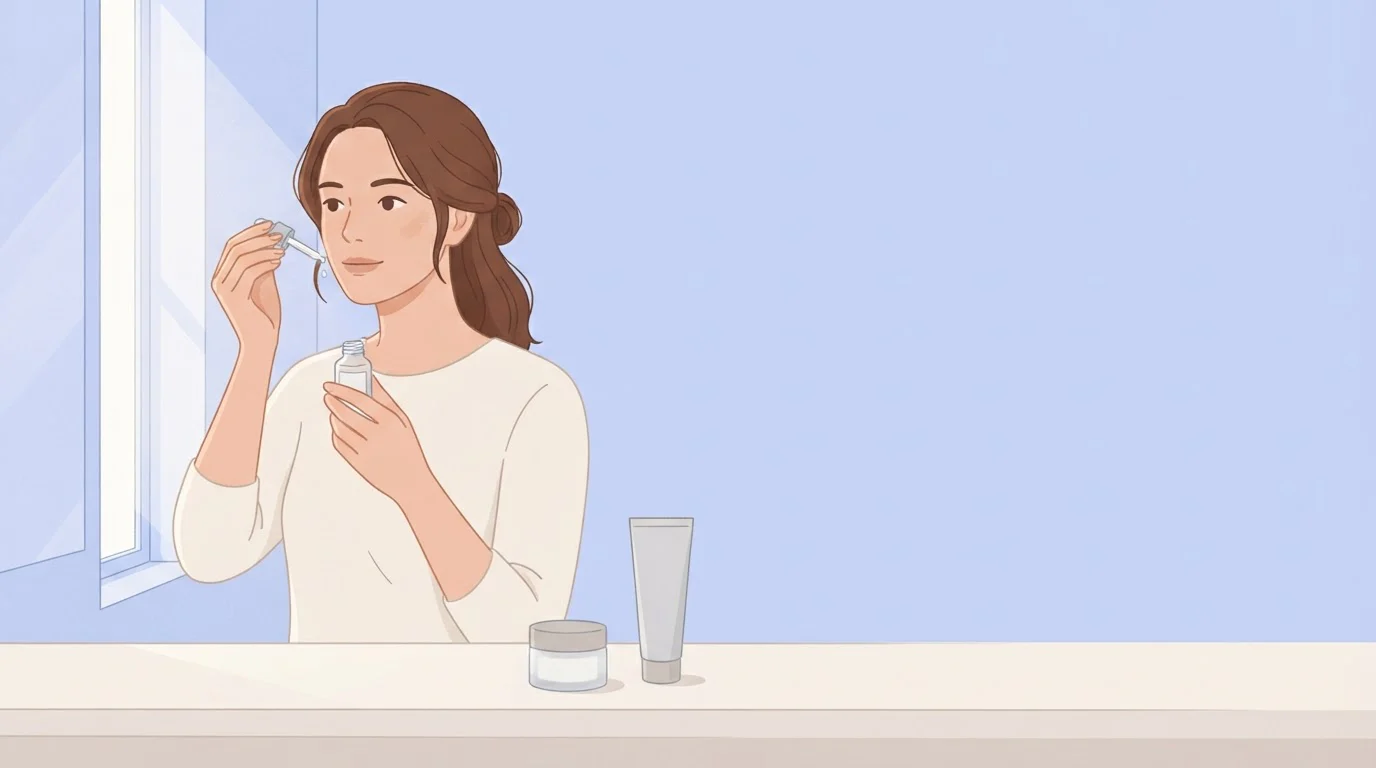
Beauty creative benefits when the audience can see how the product fits into a real routine. Application, texture, shade, use order, and a specific problem being addressed can all make the value proposition more legible than a polished claim alone.
Creator-led content can serve this job well when the creator demonstrates rather than merely endorses. We would keep the useful concept, then vary the person, skin concern, opening tension, proof sequence, and product use case. That produces new learning instead of cosmetic variation.
Match Evidence to the Claim
Clinical language, before-and-after imagery, reviews, and ingredient explanations can all improve a product story, but they need to support the precise promise in the ad. The UK claims guidance says beauty marketers must hold clinical evidence for efficacy claims and should not exaggerate effects through implied claims or post-production.
For us, this makes proof part of the creative brief, not a legal check after production. A claim about appearance, timing, or product performance should have a traceable evidence asset and clear boundaries. That discipline gives teams more material to reuse across creator video, static retargeting, product pages, and localized campaigns.
Let Offers Support, Not Replace, the Story
An introductory offer or bundle can help a proven concept convert, especially for a hero product. It cannot repair a creative that leaves the product benefit unclear. We would use offers as an execution layer after the product, audience, and proof are already coherent.
The click should continue the same story. If an ad demonstrates one product and promises one outcome, the landing experience should immediately confirm that product, explain the relevant evidence, and make the next action simple.

How to Separate Creative Fatigue from Other Performance Losses
A drop in CTR, rising CPA, or weaker return can signal fatigue, but none of those metrics proves it alone. We compare trends at the creative-family level, where related ads share the same core proposition, instead of reacting to a single ad’s daily movement.
| Observed Pattern | Check Before Calling It Fatigue | First Response |
|---|---|---|
| Frequency rises while engagement and conversion weaken | Audience size, delivery concentration, and creative age | Test a materially different opening or proof sequence |
| CPM rises while conversion rate is stable | Auction pressure, seasonality, and placement mix | Protect the concept and review budget or placement decisions |
| CTR holds but conversion rate falls | Product page speed, inventory, price, offer, and checkout | Fix the post-click experience before replacing creative |
| A new variant wins briefly, then declines | Whether it is genuinely different from the prior concept | Build a new concept, not another superficial edit |
Track a Creative Family, Not Isolated Ads
We group assets by the customer problem, hero product, proof type, and audience stage they share. That lets us see whether the whole idea is weakening or whether one execution has simply run its course. It also prevents a short-lived winner from being mistaken for a durable strategic shift.
Use a Controlled Replacement
When performance trends deteriorate consistently, we would launch one deliberately different challenger beside the incumbent. Change the customer tension, proof source, creative format, or use case, then keep the remaining variables as comparable as possible. This is how we separate fatigue from competitive pressure without blaming every loss on repetition.
Preserve What the Test Taught
A paused asset should leave behind useful memory: which product promise it made, which proof it used, who it reached, where it landed, and what happened after the click. Without that record, teams repeatedly pay to rediscover the same lesson.
What Beauty Teams Should Do Next
We would begin with a 30-day audit of live creative. Tag every asset by hero product, problem, proof, creator, format, launch date, audience stage, offer, and landing page. Then establish a baseline for each creative family using delivery, engagement, conversion, and cost metrics together.
Next, monitor the market without mistaking public activity for profitability. Meta’s public ad library can reveal active ads by keyword or advertiser, which makes it useful for spotting recurring product narratives and format shifts. We use those observations as prompts for research, not as evidence that an ad is profitable.
The operating goal is simple: preserve concepts that still work, refresh executions that show verified wear-out, and retire concepts only after a genuinely different alternative earns the right to replace them. That turns creative performance into a repeatable weekly decision process.
Turn Creative Signals into Decisions with Deepsolv
At Deepsolv, we help paid social teams turn creative performance into a decision system. We connect live ads, creative angles, customer feedback, and conversion outcomes so teams can see whether a decline points to fatigue, a weak proposition, or a post-click problem. We also preserve the evidence behind tests, making it easier to reuse a durable idea in a fresh execution instead of rebuilding from memory. If you need a weekly process for deciding what to keep, refresh, and retire with complete confidence, work with us through book a demo
FAQs on Beauty Ad Creative Longevity
What Is Creative Fatigue in Ad Performance?
Creative fatigue is sustained declining effectiveness within an audience. Confirm consistent deterioration across engagement, conversion, and cost trends before replacing creative assets or changing the core concept.
How Long Should a Beauty Ad Run Before Refreshing?
Set a baseline for each creative family. Refresh execution only when engagement, conversion, and cost deteriorate consistently while audience, budget, offer, and landing experience remain comparable.