Deepsolv Blog
Deepsolv Blog
Backed by






Creative Decision Intelligence for Meta growth teams. Know what to test next — before you spend on it.
Follow Deepsolv on InstagramFollow Deepsolv on LinkedInFollow Deepsolv on TwitterAll rights reserved © 2026 deepsolv.ai
5 min read
Published: 8/11/2025
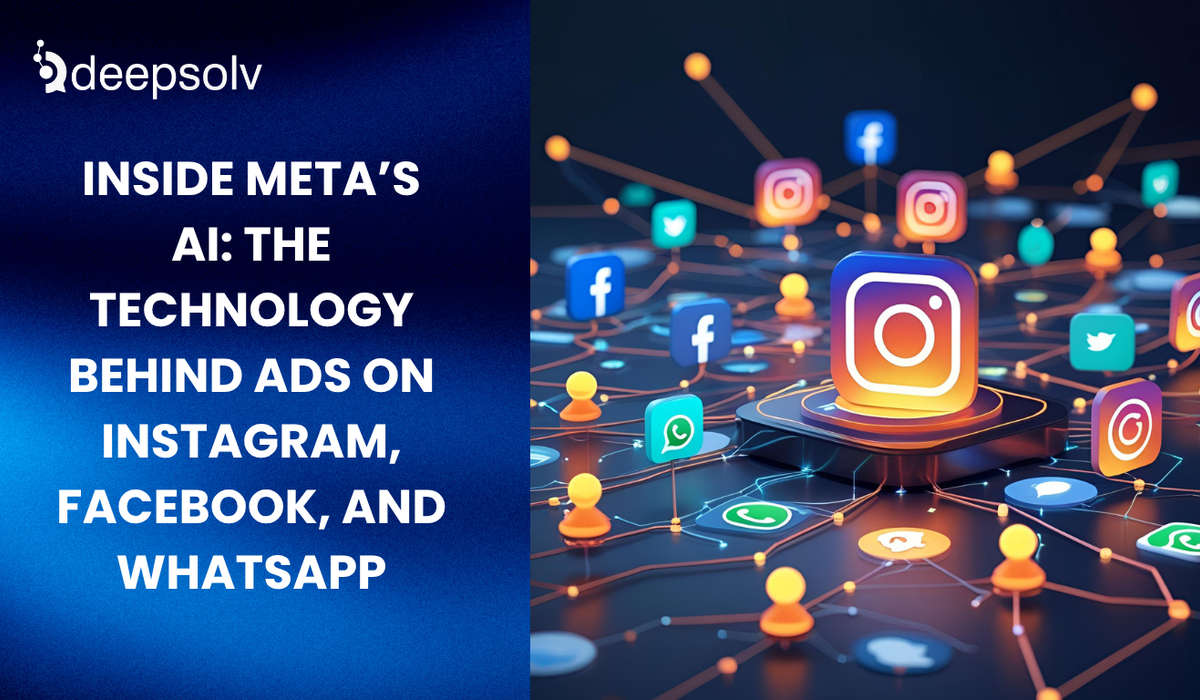
Every time you scroll past an Instagram ad that feels too on-point, it’s not a coincidence. Behind the scenes, Meta’s AI is predicting what will grab your attention next. But how does it actually work?
With nearly 98% of Meta’s revenue coming from advertising, its platforms- Facebook, Instagram, and now WhatsApp are powered by one of the most advanced AI ad systems in the world. In Q2 2025, Meta CEO Mark Zuckerberg credited this AI backbone for their revenue surge, noting: “The strong performance this quarter is largely thanks to AI unlocking greater efficiency and gains across our ads system.”
This deep dive reveals what’s happening inside that AI engine: how Meta builds, personalizes, delivers, and optimizes ads using deep learning, generative AI, and reinforcement models.
In a post-iOS 14 world, Meta had to pivot from data-heavy user tracking to privacy-respecting personalization. Enter Meta Lattice: a high-capacity neural network that replaces isolated targeting models with a unified one across Feed, Reels, and Stories.
Instead of predicting ad performance in silos, Lattice connects the dots across platforms, formats, and user signals resulting in more accurate ad delivery even with limited user data.
Key Impacts:
Meta’s Advantage+ campaigns also leverage this infrastructure. With minimal manual input, AI auto-optimizes budget allocation, ad creatives, and audience targeting in real time helping even small teams achieve high-impact outcomes.
Use Case: A mid-size DTC apparel brand switched to Advantage+ for their launch campaign and saw 3.7x more ROAS in 10 days without adjusting a single ad manually.
Meta’s AI Sandbox is where LLMs, generative visuals, and creative testing converge. Here’s what it enables:
2025 Feature Expansion:
Use Case: A skincare brand used AI Sandbox to animate their static product line into Reels. Result: 13% higher view-through rates, 17% lift in engagement, and a 2.1x return on ad spend.
WhatsApp is Meta’s most intimate platform and it’s finally monetized.
New Formats in 2025:
Targeting respects privacy norms and is based on:
Use Case: A luxury travel operator launched a WhatsApp-only campaign targeting bilingual users in metro cities. Their lead quality doubled, and conversion rate jumped by 24% compared to similar Instagram campaigns.
Meta’s native tools are powerful—but brands that combine them with external AI tools often see compounding results.
What it does: Tracks the top-performing ads across Meta, TikTok, and YouTube, then turns those insights into campaign-ready creative blueprints.
Features:
Use Case: A DTC skincare brand used Adam to discover that “before vs. after” Reels were trending for competitors. With Adam’s script and visuals brief, they launched a similar campaign and achieved a 3.2x ROAS.
Related read: How Meta Ads & Smart Content Strategy Took DTC Brands to $1M/Month
What it does: Automates community engagement on paid ads.
Features:
Use Case: A d2c brand used Brandy to reply to 92% of comments on their Facebook ads within 5 minutes. Result: 2.4x increase in conversion from comments and near-zero spam visibility.
Meta is quietly testing full-funnel campaign creation with AI:
Beta Tests Reveal:
If rolled out broadly in 2026, this could:
Meta is investing $64B+ in AI infrastructure to power this vision.
Fully AI-generated campaigns are on the near horizon
FAQs
Frequently asked questions related to this blog post