Deepsolv Blog
Deepsolv Blog
Backed by






Creative Decision Intelligence for Meta growth teams. Know what to test next — before you spend on it.
Follow Deepsolv on InstagramFollow Deepsolv on LinkedInFollow Deepsolv on TwitterAll rights reserved © 2026 deepsolv.ai
5 min read
Published: 9/30/2025
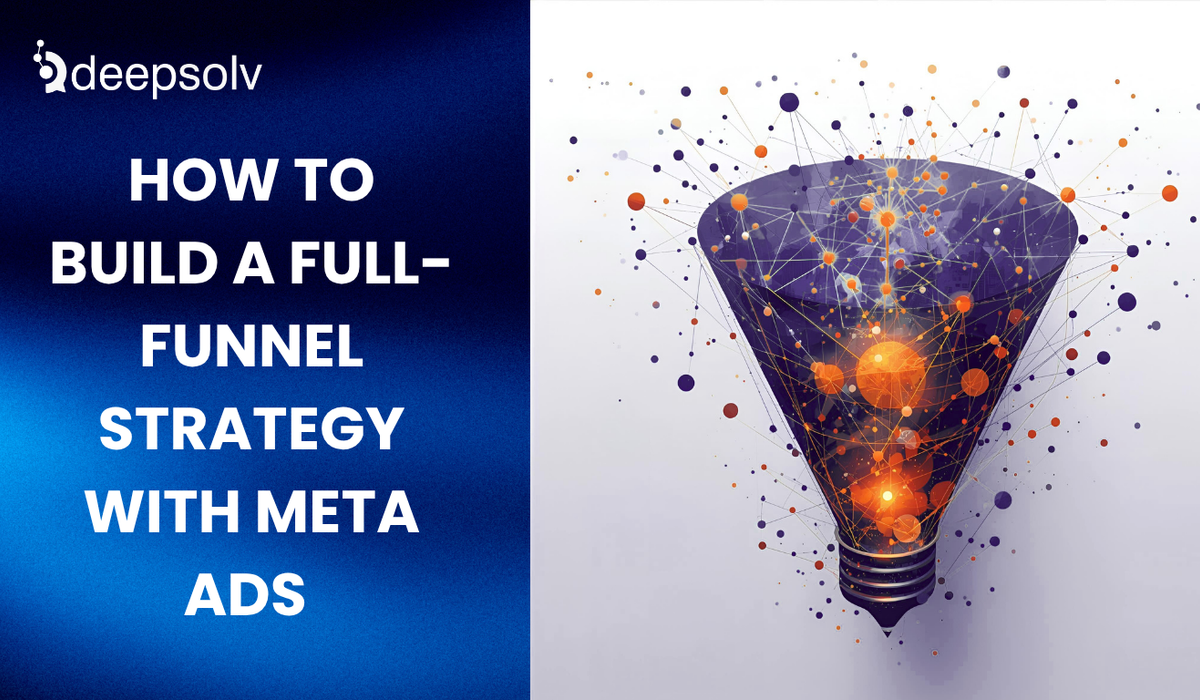
If you’ve ever wondered why your Meta Ads bring traffic but few conversions or sales without brand loyalty- it’s likely because you’re running disjointed campaigns.
In 2025, audiences are more distracted and ad-savvy than ever. They need time and context before they trust your offer. That’s where a full-funnel Meta Ads strategy becomes essential, a structure that turns strangers into loyal customers through personalized storytelling.
Think of it as three key stages of persuasion:
Each stage plays a unique role in your Meta Ads funnel and together, they form the backbone of profitable campaigns.
Before you start building your Meta Ads funnel, identify your goals at each stage.
| Funnel Stage | Objective | Target Audience | KPI |
| Awareness (TOFU) | Reach new audiences | Cold audience (no prior engagement) | Video views, reach |
| Consideration (MOFU) | Build trust and interest | Warm audience (engaged or visited site) | Clicks, add to cart |
| Conversion (BOFU) | Drive action | Hot audience (cart abandoners, email list) | Purchases, leads |
👉 Pro Tip: Choose your Meta Ads campaign objectives carefully. Selecting “Reach” or “Engagement” for a conversion goal can limit Meta’s algorithmic optimization.
The top of your funnel focuses on introducing your brand to new users who’ve never interacted with you before.
Lenskart, India’s leading eyewear D2C brand, created immersive video ads showing real people using their glasses in bright daylight. They targeted broad interest segments like “fashion,” “eyewear lovers,” and “urban professionals.”
The focus wasn’t on direct sales, it was brand recall. These awareness ads generated millions of impressions and thousands of new website visitors who later entered the conversion funnel.
Track ThruPlay metrics to retarget engaged viewers later.
Now it’s time to turn attention into interest. The Middle of Funnel (MOFU) is where your Meta Ads show proof, educate, and connect emotionally.
Mamaearth used customer testimonial videos as MOFU Meta Ads, retargeting people who watched at least 50% of their TOFU videos or engaged with their Instagram profile.
Instead of pushing discounts, the ads focused on why their ingredients were toxin-free. The tone was authentic — less “sales pitch,” more “community trust.”
Result: 2.3x higher click-through rate and lower cost per add-to-cart.
At this stage, your audience knows you — now they just need a final nudge.
Beardo runs Dynamic Catalog Ads for users who viewed specific grooming products but didn’t purchase.
The creative is simple but effective — a bold product image, testimonial quote, and a CTA like “Your cart misses you 👀”.
Result: Conversion rate up by 3.2x and ROAS improving from 2.1 to 4.4 in 45 days.
Step 5: Re-Engage and Retain Customers
The most profitable Meta Ads funnels don’t stop at conversion — they loop back. Post-purchase engagement builds lifetime value (LTV).
Nykaa re-engages customers by running retargeting campaigns showing complementary products based on past purchases. Someone who bought lipstick sees “Complete the Look” ads with eyeliner and blush.
Manually managing all funnel layers is time-consuming — which is where automation and AI optimization come in.
A premium skincare brand used Adam by Deepsolv, an AI creative strategist, to design full-funnel ad campaigns. Adam analyzed competitors’ ad funnels, created stage-specific briefs, and even suggested hooks for each level.
Meanwhile, Brandy by Deepsolv handled real-time engagement — automatically replying to comments and DMs on BOFU ads, converting questions into leads.
The result:
✅ 52% lower CPA
✅ 2.8x increase in ROAS
✅ 3.5x faster response time to potential buyers
Each layer of your Meta Ads funnel strategy contributes differently. Don’t judge them all by conversions.
| Funnel Stage | Core Metric | Secondary Metric | Benchmark (2025 Avg.) |
| TOFU | Video Views, Reach | Engagement Rate | 1.5–2% CTR |
| MOFU | Clicks, Add to Cart | Time on Site | $0.70–$1.20 per add |
| BOFU | Purchases, ROAS | Cost per Purchase | 2–4x ROAS |
| Retention | Repeat Purchase Rate | LTV, Referrals | 15–30% |
The most effective Meta Ads in 2025 blend creative emotion with algorithmic precision.
Great funnels don’t feel like ads — they feel like experiences. A user who discovers your brand through a fun Reel might later see a testimonial, then a retargeted “Offer ends soon” ad — all leading seamlessly to conversion.
A fitness brand used Adam by Deepsolv to test five ad hooks. The AI found that Reels showing “before vs. after” transformations drove 67% higher engagement in the MOFU stage. Retargeted BOFU ads then offered a free consultation converting warm leads 40% faster.
A full-funnel Meta Ads strategy isn’t just for big brands, it’s a necessity for every business that wants sustainable growth in 2025.
When you build campaigns that align storytelling, automation, and analytics, you move from chasing clicks to engineering conversions.
Tools like Adam (for AI-led content strategy) and Brandy (for engagement automation) make that scalable, allowing you to focus on creativity while AI handles execution.
If you’re serious about scaling profitably in 2025, don’t wait. 👉 Book your free strategy session with Deepsolv- we’ll map your current funnel, uncover leaks, and help you rebuild for higher ROI.
Limited slots available this month. Secure yours today.
FAQs
Frequently asked questions related to this blog post