Deepsolv Blog
Backed by









Creative Decision Intelligence for Meta growth teams. Know what to test next — before you spend on it.
Follow Deepsolv on InstagramFollow Deepsolv on LinkedInFollow Deepsolv on TwitterAll rights reserved © 2026 deepsolv.ai
4 min read
Published: 1/25/2026
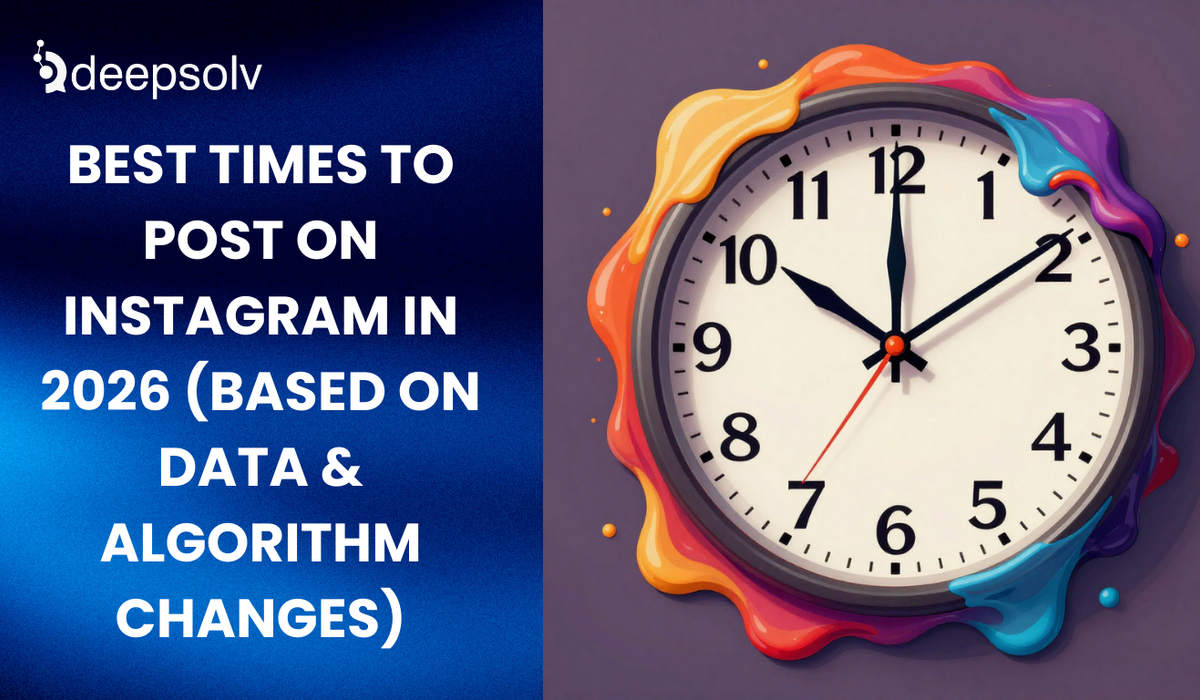
For years, Instagram advice sounded like this: “Post at 9 AM on weekdays.” “Tuesday and Thursday work best.” “Never post on weekends.”
In 2026, that advice is not just outdated, it’s actively misleading.
The Instagram algorithm has changed how content is distributed, how engagement is measured, and how timing actually affects reach. Posting at the “right time” is no longer about clocks alone. It’s about behavior, momentum, and response speed.
This guide breaks down the best times to post on Instagram in 2026, how the algorithm now interprets timing, and what brands should actually focus on if they want consistent reach and engagement.
Yes, but not in the way most people think.
The best times to post on Instagram in 2026 depend on:
The algorithm doesn’t reward when you post. It rewards what happens immediately after you post.
To understand instagram posting times today, you need to understand how distribution works now.
In 2026, the Instagram algorithm prioritizes:
This means your post is first shown to a small test audience. If engagement happens quickly and meaningfully, reach expands. If it doesn’t, the post stalls — regardless of the time you posted.
Timing still matters, but only because it affects early engagement probability.
Generic charts fail because:
Two brands posting at the same time can see completely different results based on:
In 2026, posting at the “wrong” time with high engagement beats posting at the “right” time with silence.
Instead of one universal schedule, timing now depends on format.
Reels are the most sensitive to timing because they rely heavily on early traction.
Why?
The best time to post Reels is when your audience is most likely to linger, not just scroll.
Carousels behave differently. They reward deliberate engagement.
Carousels perform well when people:
Educational, opinionated, and narrative carousels benefit from slower scroll periods.
Stories are not discovery tools. They’re retention tools.
Consistency matters more than timing here. Stories work when they feel present, not perfectly scheduled.
While personalization matters most, some patterns still exist.
These are starting points, not rules.
This is the most important shift to understand.
Instagram in 2026 asks:
A post at an “average” time with:
…will outperform a post at a “perfect” time with no interaction.
This is where most brands lose reach — not because of timing, but because engagement isn’t handled fast enough.
In 2026:
Deepsolv helps brands:
This means your post doesn’t just go live — it stays alive during the critical early window the algorithm watches.
Posting time creates opportunity. Response speed turns it into reach.
Forget global charts. Do this instead:
The best posting times reveal themselves through behavior, not calendars.
Instagram rewards presence, not punctuality.
In 2026, the Instagram algorithm doesn’t reward punctuality. It rewards presence, relevance, and responsiveness.
The best times to post are the times when:
If your reach feels inconsistent, the problem is rarely timing alone.
It’s what happens after you post.
👉 Start a free Deepsolv trial and see how faster engagement turns good posting times into sustained reach.
FAQs
Frequently asked questions related to this blog post