Spring Sale Ads on Meta: Date Your Window, Prove the Price
Good spring sale ads on Meta start with three checks: a dated window set against competing retail events, a genuine former price, and an offer structure worth testing. Design comes after.

By Sachit Sharma, CEO & Founder · Updated 12 Nov 2026

Key takeaways
- Treat a spring sale ad on Meta as three decisions made before design: the dates, the former price, and the offer structure. The card below turns them into six pass-or-fail checks.
- There was no single spring sale date in 2026. In one NBC News Select table of eight retailers, four were running on March 25 and 26 (our count, below).
- A former price must be the price you actually charged regularly for a reasonably substantial period, under the Federal Trade Commission's pricing guides. Sale prices are also the retail default, so a percentage alone rarely stands out.
- Test one offer structure against another, in one window, with one variable changed. Do not test depth alone.
In this article
- 1What should spring sale ads on Meta settle before anyone designs them?
- 2When do spring sales actually run, and who are your ads up against?
- 3How do you prove the former price in a spring sale ad?
- 4Is a sitewide discount enough to make a spring sale ad stand out?
- 5Why do spring sale ads stop selling after a few days, and what should you queue?
- 6How do we help you pick which spring sale offer to test?
- 7Frequently asked questions
A spring sale is not one event. In 2026 Amazon's Big Spring Sale ran March 25 to 31, Sephora's Spring Savings Event ran April 10 to 20, and Wayfair scheduled Way Day for April 25 to 27 (DealNews, updated April 22, 2026). A "Spring Sale" ad from your brand lands in the same Meta (Facebook and Instagram) feed as theirs, whichever week you pick.
So the usual advice, a slogan, a countdown or a pastel template, answers a later question. The decisions that determine whether the ad earns its spend come first: when to run, whether the "was" price is one you can defend, and which kind of offer to test.
These are the questions this page answers: should I keep a high price and run 20% off? Why do my ads sell for three days and then die? Why didn't peak season lift sales? It also gives you a pre-flight card to use before you brief a single creative.
What should spring sale ads on Meta settle before anyone designs them?
Settle three things first, in this order: your dates against everyone else's, whether the former price you will show is genuine, and which offer structure you are testing. Design and copy come after. The card below turns those into six checks, each with a pass and a fail.
Definition
Definition
| # | Check | Pass | Fail |
|---|---|---|---|
| 1 | Window: list every competitor or big-retailer event that overlaps your dates | You can name each overlapping event and have moved your dates or chosen an offer they don't run | You picked dates because "it's spring" |
| 2 | Former price: pull your price history for the 90 days before launch | The "was" price was your listed price on most of those days | You raised it shortly before the sale, or it was listed only briefly |
| 3 | "Free" terms: compare the purchased item's price with its regular price | Price unchanged, and a first-time reader can state the terms after one look at the ad | The price rose, or the terms need hunting for |
| 4 | Structure: choose one of flat, tiered, bundle or gated per test | Only the structure differs between versions; audience, price and creative are the same | Two things changed at once |
| 5 | Deadline: compare the end date in the ad with your checkout | The offer ends when the ad says | The countdown resets or the sale quietly continues |
| 6 | Replacements: count the ad versions ready before launch day | At least two replacement versions are queued (our recommendation) | One ad carries the whole window |
| Test | Version A | Version B | What you learn |
|---|---|---|---|
| Flat vs tiered | 20% off | Spend more, save more | Whether order value (average spend per order) rises more than conversion rate (share of visitors who buy) drops |
| Flat vs bundle | Percentage off one item | A bundle with the saving shown | Whether shoppers prefer a visible saving to a percentage |
| Public vs gated | Offer open to everyone | Offer for your email list or members | Whether exclusivity beats reach |
Run each test in its own window and write the hypothesis before launch with our A/B test hypothesis template. This is a marketing checklist, not legal advice.
When do spring sales actually run, and who are your ads up against?
Spring sales in 2026 ran on different weeks from March 9 to April 27, so no single date defines the season. The eleven events below are a hand-picked sample from public sources. The overlap in late March shows why your dates matter as much as your discount.
As of November 2026, the 2027 dates for Amazon's Big Spring Sale, Sephora's Spring Savings Event and Wayfair's Way Day have not been announced. To place your own dates, start from last year's windows in the table below, then check the retailers' announcements in January or February and adjust.
| Event (2026) | Window | Structure | Source |
|---|---|---|---|
| Linsoul spring sale | Mar 9 to 26 (China Standard Time, GMT+8) | Sitewide discounts Mar 15 to 26 (most items 10% off, select items up to 50%); tiered spend-and-save up to $120 USD | |
| Walmart Beauty Event | Through Mar 19 | Skincare, makeup and wellness | |
| Wayfair Spring Cyber Week | Mar 19 to 23 | Rewards-member exclusives | |
| REI | Through Mar 23 | Member deals, three 20% off coupons | |
| Nordstrom March Savings | Through Mar 23 | Up to 25% on select products | |
| Ulta 21 Days of Beauty | Through Mar 26 | Rotating daily and week-long deals | |
| Sephora One-Day Beauty Deals | Through Mar 26 | New assortment every 24 hours | |
| Amazon Big Spring Sale | Mar 25 to 31 | Category deals up to 50% off Outlet, 40% off fashion, 30% off beauty; Prime-exclusive Best Deals, open to all shoppers | |
| Target Circle Deal Days | Mar 25 to 27 | Circle members only | |
| Sephora Spring Savings Event | Apr 10 to 20 | Code SPRINGSALE: 10%, 15% or 20% by loyalty tier; 30% off Sephora Collection | |
| Wayfair Way Day | Scheduled Apr 25 to 27 | Sitewide discounts of up to 80% expected | DealNews (updated Apr 22, 2026) |
The counts below come only from NBC News Select's table of eight retailers, published March 16, 2026. We compared each stated window and offer type:
- Four of the eight (Amazon, Target, Ulta, Sephora) were running on March 25 and 26.
- Four of the eight (Amazon, Target, Wayfair, REI) had a member-only or member-exclusive component, including Amazon's Prime-exclusive deals.
That is one table of eight in one year, not the market. Read it as a pattern to check in your own category.
Levi's offers a contrast in how depth is stated. It ran 30% off sitewide plus an extra 40% off already marked-down styles (Valet, April 7, 2026), while Nordstrom's March Savings Event stated up to 25% on select products (NBC News Select). "Up to" is a ceiling, not the typical discount.
Easter moves every year, so build your calendar backward from its date, with Mother's Day Facebook ads planning close behind.
Our recommendation: if your dates fall inside a stretch where big names run events, do not compete on percent-off alone. Move your dates, or change what you offer, for example a bundle or a code for your own list.
How do you prove the former price in a spring sale ad?
Show a former price only if it was the actual price you charged regularly for a reasonably substantial period. That is the test in the US Federal Trade Commission's (FTC) pricing guides, codified at 16 CFR (Code of Federal Regulations) 233.1. The FTC guides give no day count, so keep a dated price log.
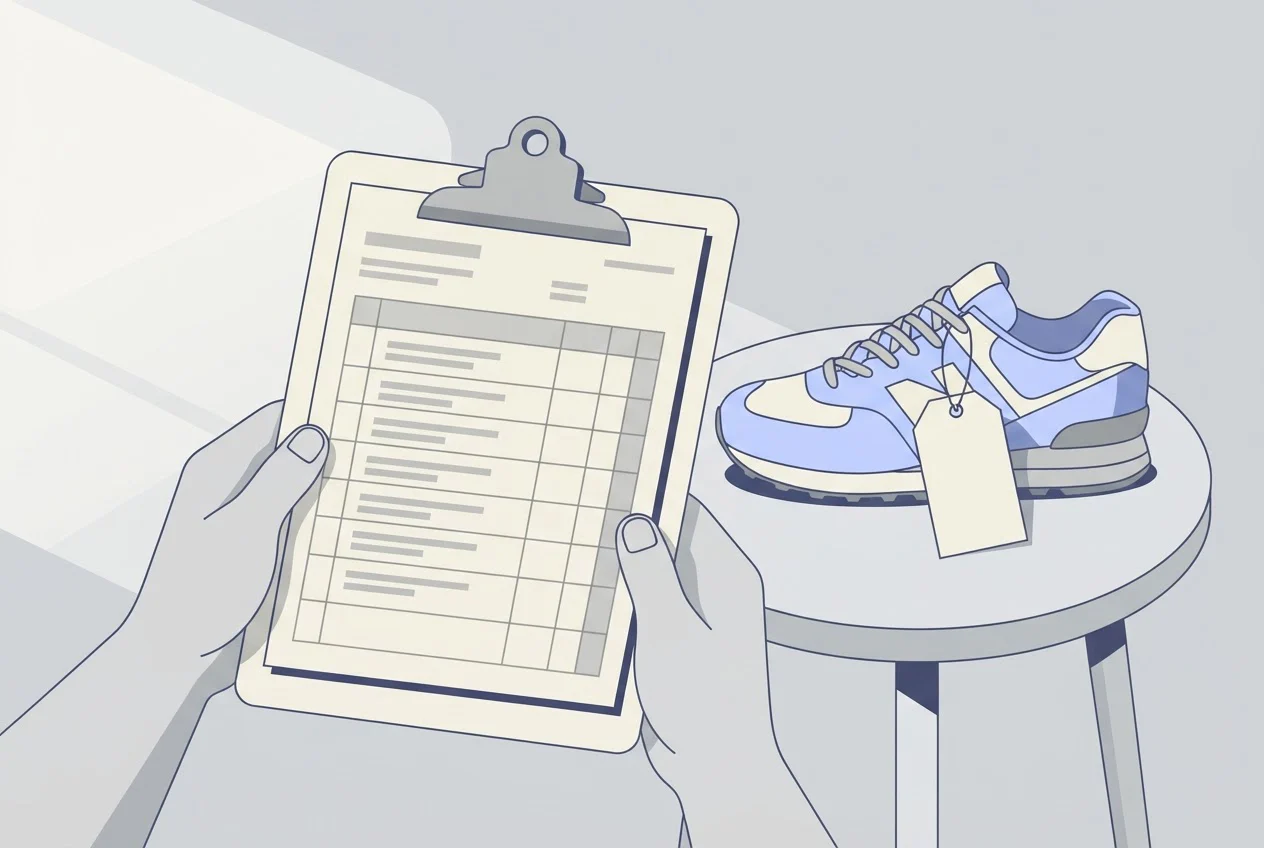
The guides require a former price to be "the actual, bona fide price at which the article was offered to the public on a regular basis for a reasonably substantial period of time". The guides' own example is a retailer whose pens regularly cost $7.50, marked at $10 for a few days and then advertised as "Were $10, Now Only $7.50!" That is a false claim. A genuine former price must also produce a saving that is not so small as to be meaningless. These are FTC guides rather than a statute, but they describe what the agency treats as deceptive.
"Free" offers have their own rule. When a free item is tied to a purchase, the price of the purchased product should not be raised from its regular price, and the terms should be disclosed clearly and conspicuously (FTC advertising FAQ for small businesses). That covers "buy one, get one free" and free-gift bundles.
As of November 2026, California requires a former price to have been the prevailing market price within the three months before the ad, or the ad must state the date it applied (Cal. Bus. & Prof. Code section 17501). Check 2 uses a 90-day lookback to match that three-month window. Sellers in other states should check their own state's pricing rules. If your price history can't show the former price as your normal price, drop it and lead with the sale price or a bundle.
Is a sitewide discount enough to make a spring sale ad stand out?
No. Sale prices are the default in US retail, so a percentage alone rarely separates your ad. Consumers' Checkbook found that 21 of 25 national retailers advertised sale prices more than half the time. What can differ is the structure, the window and a price you can prove.
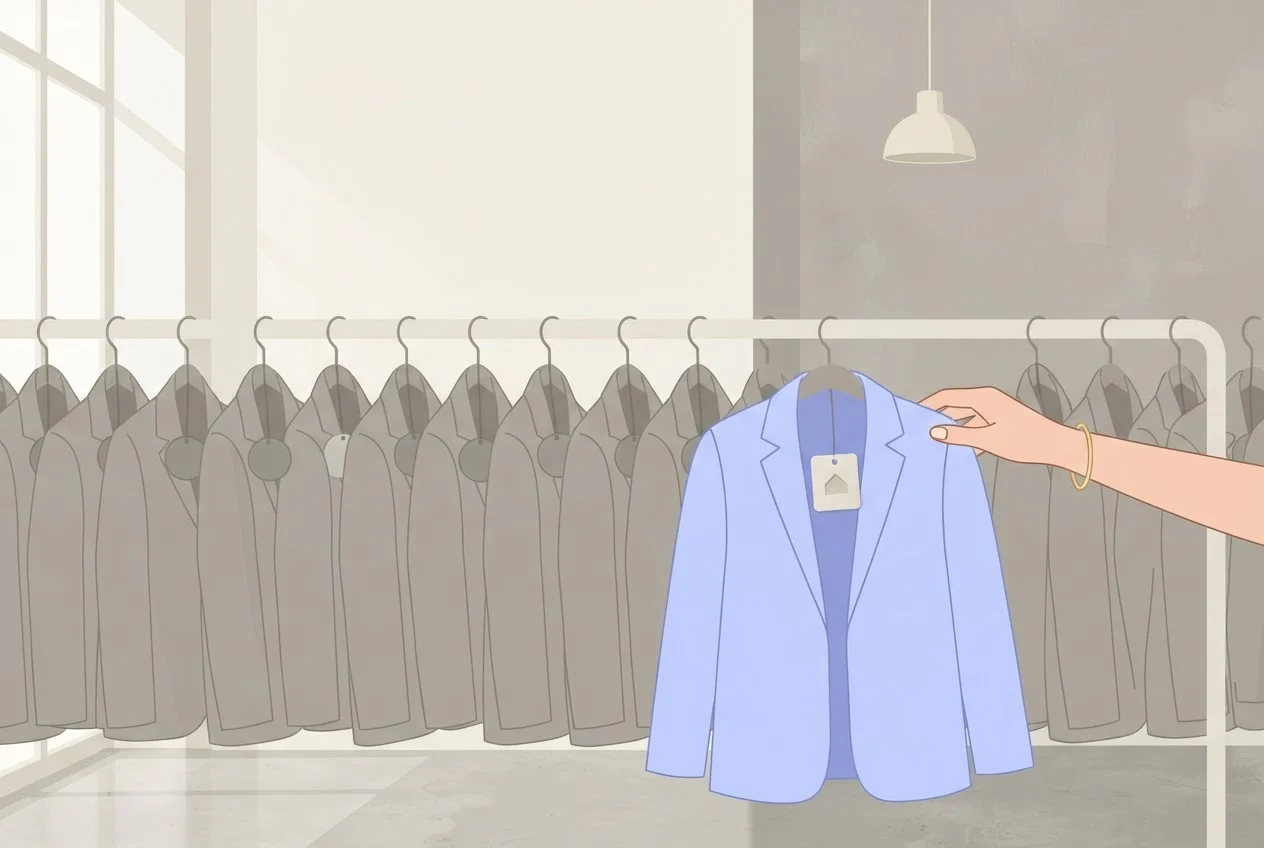
The study tracked 25 major retailers, each with 25 or more items, weekly for 24 weeks starting in February 2025. 21 of the 25 advertised sale prices more than half the time (Consumers' Checkbook, a nonprofit). In its 2018 project Checkbook found six department-store chains with fake discounts on at least half of tracked items more than half the time; that was a different retailer set, so the two figures are not a trend. The 2025 study covers one season, so treat it as strong evidence of a pattern rather than a fixed rate. Our inference: when shoppers see discounts everywhere, the discount number carries less information than how the offer is built and whether the price history holds up.
Whether to keep a high price and run 20% off or lower the price depends on how much of the catalog you discount. We'd do neither across the whole catalog. Discount a short list of products where traffic is healthy but conversion is weak, start with the narrowest discount your margin allows (10% is a sensible first test), and add depth only when a test shows it pays. To check what a discount costs, use this model (ours, not an official figure): extra units needed to keep total margin flat = (old margin per unit minus new margin per unit) / new margin per unit x units sold at the old price. Margin per unit is price minus unit cost. For a 20% discount, new margin per unit is the old margin per unit minus 20% of the old price. Our Labor Day ads page covers the same check in more depth.
A sale does not always lift sales because a discount acts only on conversion rate and order value. If the real bottleneck is traffic, a deeper discount does not fix it, so check which of the three is the constraint before cutting price. Structures with a reason to buy more, such as tiered spend-and-save or bundles, work on order value. Gated offers such as Sephora's tiers and Target's Circle days work on your best customers first.
Why do spring sale ads stop selling after a few days, and what should you queue?
Sale creatives wear out quickly inside a short window, so queue replacements before launch. Make the second and third versions with a different hook (the opening line or visual that stops the scroll) for the same offer. Keep the deadline real.
This is our recommendation, not a measured rate. When a sale lasts days rather than weeks, an ad that fades on day three takes a large share of the window with it. Two changes help:
- Change the hook, not the offer.Run the same discount and structure under a new opening line or image. You learn which hook works without muddying the offer test.
- Use deadlines you will honor.
A fixed end date that checkout enforces is the easiest urgency to defend. A countdown that resets corrupts your results and your trust. Our scarcity ads page ranks which urgency cues to test first.
How do we help you pick which spring sale offer to test?
We built Deepsolv to settle the question that sits upstream of design: what to test next. We track competitor ads on Meta across messaging, hooks, offers and formats, and read customer signals from reviews, comments, DMs and Reddit. We turn them into a ranked weekly test plan with reasons for each recommendation.
For a spring sale, that means checks 1 and 4 on the card above are done with evidence. You can see which offer structures rivals are running in your category before you choose yours, and which are crowded. Brand Brain, our memory of what worked, what failed and why, means next spring's test starts from this spring's result. Recommendations guide your experiments, but they do not guarantee profitable ads.
Our platform suits teams spending around $50,000 a month on Meta. To start looking before you talk to us, our free trending ads page lists US Meta ads by industry and by occasion, including Easter, straight from the Meta Ads Library, with no signup.
To see how it would work for your category, book a demo with our founding team. Ask about pricing there, or write to sachit.sharma@deepsolv.com.
Find the spring sale offer worth testing next
Frequently asked questions
Sources
- 1.Amazon, Big Spring Sale 2026 FAQ
- 2.NBC News Select, spring sales shopping guide, March 16, 2026
- 3.TODAY, Sephora Spring Savings Event 2026, updated April 14, 2026
- 4.Valet, Levi's Big Spring Sale 2026, April 7, 2026
- 5.Linsoul, Spring Sale 2026
- 6.DealNews, April discounts, updated April 22, 2026
- 7.eCFR, 16 CFR 233.1, Former price comparisons
- 8.FTC, Advertising FAQs: A Guide for Small Business
- 9.California Legislative Information, Business and Professions Code section 17501
- 10.Consumers' Checkbook, sale price tracking study